
TL;DR: Soft surfaces (rugs, curtains, upholstered furniture) absorb sound inside your unit. Seal door and window gaps with removable weatherstripping to block hallway and street noise. Acoustic panels reduce echo but don’t block wall-transmitted sound — for that, push a heavy bookshelf against the shared wall. White noise machines cover what you can’t eliminate. All of this works without permanent changes or deposit risk.
Thin walls, hollow-core doors, and hard flooring are standard in Canadian apartment buildings. Whether you’re in a Toronto high-rise, a Montreal walk-up, or a Vancouver concrete tower, the noise problem is usually the same: you hear too much of your neighbours, the hallway, and the street.
Toronto’s noise bylaw (Chapter 591) restricts construction noise to 7 a.m.–7 p.m. on weekdays and bans power tools like leaf blowers between 7 p.m. and 8 a.m. the next day (City of Toronto, 2025). Bylaws like this cover construction and tools, not a neighbour’s regular footsteps or TV — which is exactly why the renter-friendly fixes below matter more than filing a complaint.
The good news is that most of the effective fixes are renter-friendly. They don’t require drilling into walls, gluing anything permanent, or getting your landlord’s written permission. If you’re also working on how your apartment is arranged, our guide to small apartment layout ideas covers furniture placement in more detail — and some of those layout changes help with noise too.
Why Apartments Are Loud (and What You Can Actually Control)
Sound enters your apartment in two ways: airborne noise (voices, traffic, music) travels through air gaps around doors, windows, and vents. Impact noise (footsteps, dropped objects, furniture dragging) travels through the building structure itself — floors, walls, and ceilings.
Key takeaway: Apartment noise enters through two pathways: airborne sound (voices, traffic, music) travels through air gaps around doors, windows, and vents, while impact noise (footsteps, furniture dragging) travels through the building structure. Renters can add mass with heavy furniture, absorb sound with soft surfaces, and seal gaps where airborne noise leaks in.
As a renter, you can’t rebuild walls or replace floors. But you can:
- Add mass to walls using heavy furniture
- Absorb sound inside your unit with soft surfaces
- Seal gaps where airborne noise leaks in
- Mask remaining noise with white noise or background sound
Each section below covers one of these approaches with specific products, Canadian pricing, and installation methods that won’t cost you your deposit.
Seal the Gaps First: Weatherstripping and Door Sweeps
The single most effective thing most renters can do is seal the gap under and around their front door. In older Canadian apartments, the gap under the door can be 15mm or more — enough for hallway conversations, cooking smells, and traffic noise from the lobby to come straight in.
Door sweeps
A removable door sweep slides onto the bottom of the door and peels off when you move out. Look for adhesive-backed sweeps or ones with a tension fit.
- Canadian Tire carries basic adhesive door sweeps for $8–$15 CAD
- Home Depot Canada stocks adjustable aluminium sweeps from $12–$25 CAD
- Amazon.ca twin-draft stoppers (the fabric tube kind) from $10–$18 CAD
The twin-draft stoppers are the easiest to install — they slide under the door with no tools and no adhesive. They’re less effective than a proper sweep but better than nothing, and they come off in two seconds on move-out day.
Weatherstripping tape
Self-adhesive foam or rubber weatherstripping seals the gaps around the door frame. It compresses when the door closes, blocking both noise and drafts.
- A roll of foam weatherstripping tape costs $5–$12 CAD at most hardware stores
- V-strip (vinyl) weatherstripping is slightly more durable and runs $8–$15 CAD
- For windows, use the same foam tape along the frame edges where you feel drafts
Apply weatherstripping around the full door frame — top and both sides. Clean the surface with rubbing alcohol first so the adhesive sticks properly. It peels off cleanly on most painted metal and wood frames.
Don’t forget the windows
Older single-pane windows in Canadian apartments let in a lot of street noise. If your building hasn’t upgraded to double-pane, you can:
- Apply window insulation film (the shrink-wrap kind from 3M or Frost King, $10–$20 CAD per window kit) — it creates a dead-air buffer that dampens sound and improves insulation for winter
- Use removable caulk (rope caulk) around the window frame for $5–$8 CAD per roll
- Add heavy curtains on top of either option (covered below)
Rugs and Underlay: Your Floor Is a Speaker
Hard floors — laminate, vinyl plank, hardwood, concrete — reflect sound instead of absorbing it. Every footstep, chair scrape, and dropped phone echoes around the room and transmits downward to the unit below.
A thick area rug with a dense underlay is one of the highest-impact noise changes you can make.
What to look for
- Pile height matters. A shag or high-pile rug absorbs more sound than a flat-weave kilim. For noise reduction, thicker is better.
- Underlay is half the job. A felt or rubber rug pad underneath adds mass and absorbs vibration. An 8mm felt pad runs $40–$80 CAD for a 5×8 foot size at stores like Wayfair.ca or HomeSense.
- Cover as much floor as possible. One small rug in the centre of a room won’t do much. Ideally, cover at least 60–70% of the hard floor area in rooms where noise is a problem.
Where to buy in Canada
- IKEA Canada — the VINDUM high-pile rug starts around $200 CAD for 170×230cm
- HomeSense / Winners — unpredictable stock but regularly has large rugs for $80–$150 CAD
- Wayfair.ca — wide selection, frequent sales, filter by pile height
- Facebook Marketplace — used rugs in good condition often go for $30–$60 CAD in major cities
If you’re in a condo with a noise clause in the bylaws (common in Toronto and Vancouver buildings), rugs with underlay help you stay compliant.
Heavy Curtains for Windows and Doors
Curtains made from dense, heavy fabric absorb sound reflections inside your room and reduce noise coming through windows. They won’t block a jackhammer, but they noticeably soften traffic noise, sirens, and street-level conversations.
What works
- Thermal blackout curtains are often heavy enough to double as sound-absorbing curtains. The multi-layer ones (with a foam or felt backing) perform best.
- Hang them floor to ceiling and wider than the window frame — an extra 15–20cm on each side. Sound sneaks around the edges of short or narrow curtains.
- Use a ceiling-mounted curtain rod or a tension rod for a no-drill option. Tension rods work well in window alcoves and for hanging a curtain across a bedroom doorway.
Canadian pricing
- IKEA’s MAJGULL blackout curtains run about $50–$70 CAD per pair and are heavy enough for decent sound absorption
- Amazon.ca “soundproof curtains” (really just heavy blackout curtains with a felt layer) for $40–$90 CAD per panel
- For a doorway curtain to block hallway noise, a heavy blanket on a tension rod works well and costs very little
If you’re dealing with both noise and winter cold, heavy curtains solve both problems at once — they reduce drafts and cut heating costs, which matters in a Canadian winter.
Acoustic Panels: What They Do (and Don’t Do)
Acoustic panels are the first thing people search for when they want a quieter apartment. It’s worth understanding what they actually do before you spend money.
What they do: Absorb sound reflections inside your room. If your apartment echoes — voices sound harsh, music sounds muddy, phone calls pick up reverb — acoustic panels fix that by soaking up reflected sound waves.
What they don’t do: Block sound from coming through a wall. A foam panel on a shared wall will not stop your neighbour’s bass, TV, or conversations. Sound transmission through walls requires mass, not absorption.
Renter-friendly mounting
- Command strips (3M) hold lightweight fabric-wrapped panels up to about 3kg per strip set. Use multiple strips per panel.
- Lean panels against the wall on a shelf or on the floor, propped at an angle. This works well for large panels and avoids wall contact entirely.
- Hang from a picture rail if your apartment has one (common in older Montreal and Toronto buildings).
Canadian pricing and sources
- Primacoustic (Canadian company, based in BC) makes professional-grade panels. Their Broadway series starts around $80–$120 CAD per panel, available through Long & McQuade or Amazon.ca.
- Amazon.ca acoustic foam panels (12-packs) for $25–$40 CAD — these work for echo reduction but look less polished.
- DIY option: Rigid fibreglass insulation (Roxul/Rockwool Safe’n’Sound, about $60 CAD per batt from Home Depot) wrapped in fabric makes an effective panel for half the cost of retail. There are dozens of tutorials online for this. Just wear gloves and a mask when cutting fibreglass.
Place panels at the first reflection points — the walls directly beside and across from where you sit or sleep. Two or three well-placed panels do more than covering an entire wall randomly.
Furniture Placement as Noise Control
Where you put your furniture changes how much noise you hear, and this costs nothing.
Use bookshelves as sound barriers
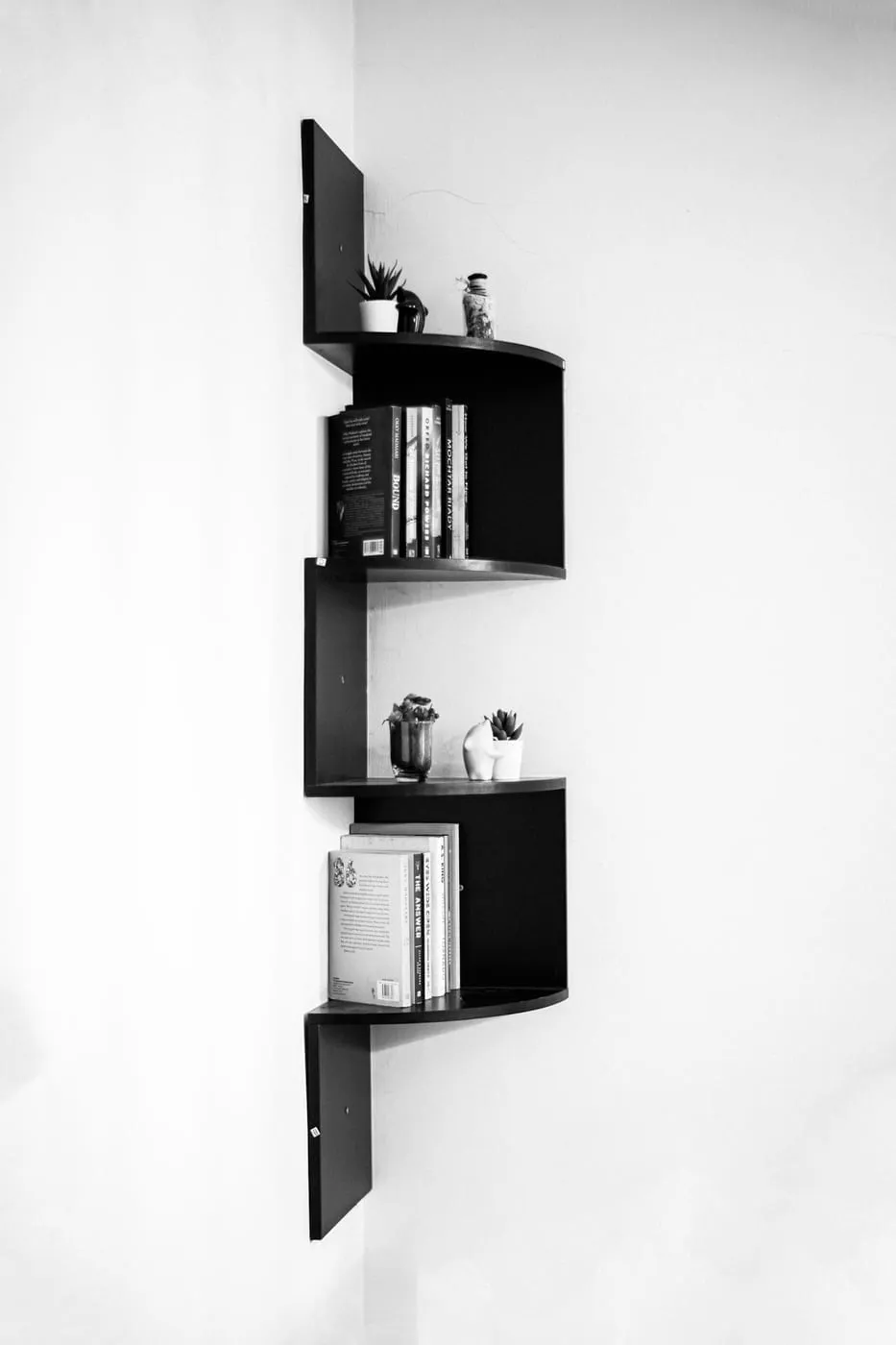
A tall, heavy bookshelf — fully loaded with books — against a shared wall adds meaningful mass. Mass is what actually blocks sound transmission. A single Billy bookcase from IKEA ($90–$130 CAD) filled with books provides more sound blocking than a wall full of foam panels.
For maximum effect:
- Fill every shelf. Half-empty shelves don’t add enough mass.
- Push the bookcase flush against the wall. No air gap.
- Use multiple bookcases on a long shared wall if you have them.
If you’re short on books, thrift stores and library sales in Canadian cities sell hardcovers by the bag. It doesn’t matter what the books are — you need the weight.
Move your bed away from the noisy wall
If your bedroom shares a wall with a neighbour’s living room or kitchen, rearrange so your headboard is on the opposite wall. This is especially useful in condo layouts where bedrooms are stacked next to common areas.
Upholstered furniture absorbs sound
A fabric sofa absorbs more sound than a leather one. An upholstered headboard absorbs more than a bare wall. If you’re choosing between two pieces of furniture and noise is a concern, go with the softer, heavier option.
White Noise and Sound Masking
Some noise can’t be blocked — you can reduce it, but a thin wall is still a thin wall. Sound masking fills your space with consistent background noise that makes intermittent sounds (a door slamming, a dog barking, a conversation next door) less noticeable.
Options
- White noise machines — the LectroFan (around $60–$80 CAD on Amazon.ca) is a popular choice with multiple sound profiles. The Yogasleep Dohm (about $55–$70 CAD) uses a real fan inside for a more natural sound.
- A regular fan works if you’re not picky about the sound profile. Box fans and tower fans from Canadian Tire ($25–$50 CAD) produce enough ambient noise to mask hallway and street sounds.
- Apps and smart speakers — free white noise apps (myNoise, White Noise Lite) or asking your Google/Alexa device to play brown noise cost nothing.
White noise is especially helpful for sleep. If you work from home in a noisy apartment, noise-cancelling headphones (starting around $80 CAD for decent over-ear models) are worth the investment, but that’s personal audio, not room treatment.
Provincial Noise Bylaws: What the Law Says
Every Canadian province handles noise complaints differently, and the specifics depend on your municipality. Bylaws also get revised over time, so treat the table below as a starting point, not the current legal text — always check your own city’s bylaw page for exact hours and enforcement.
| Province / City | Typical quiet hours | Who enforces |
|---|---|---|
| Ontario (Toronto) | 11 PM – 7 AM (city bylaw) | Municipal bylaw officers |
| Quebec (Montreal) | 9 PM – 7 AM weekdays, 9 PM – 9 AM weekends (varies by borough) | Ville de Montréal, police for extreme cases |
| BC (Vancouver) | 10 PM – 7 AM | City bylaw officers |
| Alberta (Calgary) | 10 PM – 7 AM | Community peace officers |
| Alberta (Edmonton) | 10 PM – 7 AM | Bylaw enforcement |
A few things to keep in mind:
- Your lease may have stricter rules. Many condo boards and property managers set quiet hours earlier than the municipal bylaw.
- Bylaws typically cover “unreasonable” noise, not all noise. Normal living sounds (walking, talking at a normal volume, running appliances) are generally not bylaw violations, even if you can hear them.
- Document before you complain. If a neighbour’s noise is genuinely excessive, keep a log of dates, times, and descriptions before contacting your landlord or filing a complaint. In Ontario, the Landlord and Tenant Board handles disputes between tenants and landlords; in Quebec, it’s the Tribunal administratif du logement.
Knowing your rights matters, but the practical reality is that most apartment noise comes down to building construction. The strategies above help you control your own environment regardless of what’s happening next door.
Putting It All Together: A Priority Order
If you’re starting from scratch and want the most noise reduction for the least money and effort, work through this list in order:
- Seal the front door — weatherstripping tape and a door sweep ($15–$25 CAD total)
- Add a thick rug with underlay to the loudest room ($80–$200 CAD depending on source)
- Hang heavy curtains on windows facing the street ($50–$100 CAD per window)
- Push a loaded bookshelf against the noisiest shared wall (free if you already own one)
- Add 2–3 acoustic panels at reflection points if echo is a problem ($50–$120 CAD)
- Use a white noise machine for sleep or focused work ($30–$80 CAD)
For renters following our no-damage decor guide, every item on this list uses removable mounting or freestanding placement. Nothing here requires landlord permission in any Canadian province.
The total cost to meaningfully quiet a one-bedroom apartment is roughly $200–$500 CAD if you’re buying new. If you source rugs and bookshelves secondhand, you can do it for well under $150 CAD.
Related Reading
- Small Apartment Layout Ideas That Save Space (Canada) — furniture placement principles that also help with noise
- Renter’s No-Damage Decor Guide for Canada — how to hang, mount, and install without losing your deposit
- Condo Storage Ideas for Toronto and Vancouver — making the most of tight condo layouts