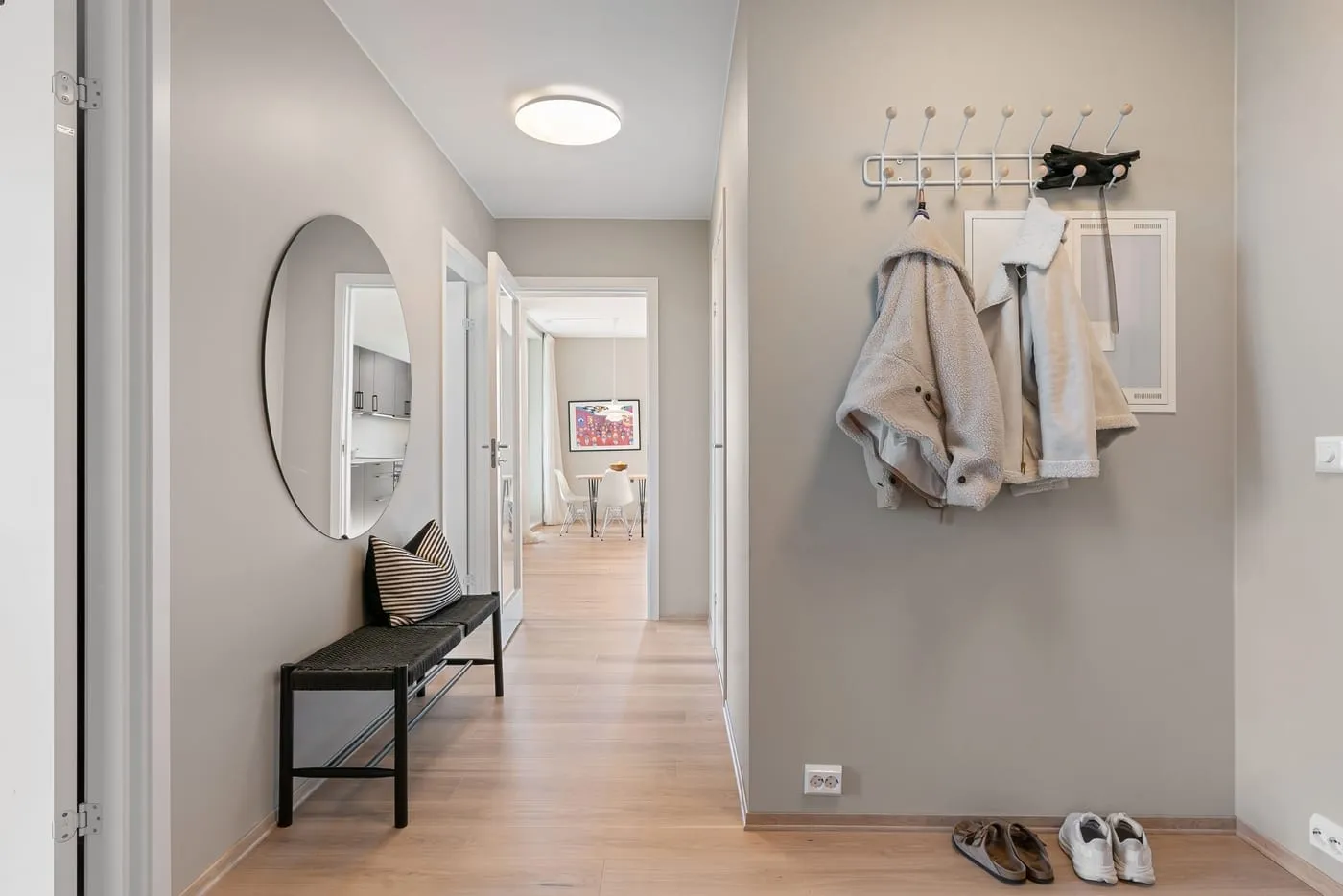
Most Canadian apartment hallways present the same problem: too narrow for standard furniture, no natural light, and no obvious place to put anything. A typical apartment corridor is 90–110 cm wide — enough to walk through comfortably but not enough for a normal shelving unit or console table without blocking the path.
The solutions are all about depth. Furniture and organizers that are 20–25 cm deep function in a hallway without compromising circulation. Everything wider than 30 cm starts to feel cramped.
The Depth Rule
Before buying anything for an apartment hallway, measure the width of the narrowest point of the corridor. Subtract 75 cm for clear walking width (the minimum comfortable path for one person). The remainder is your maximum furniture depth.
Key takeaway: Before buying anything for an apartment hallway, subtract 75 cm (the minimum comfortable walking width) from the narrowest corridor point. A 90 cm hallway allows only 15 cm of furniture depth, a 100 cm hallway allows 25 cm, and 110 cm allows 35 cm maximum.
| Hallway width | Max furniture depth |
|---|---|
| 90 cm | 15 cm |
| 100 cm | 25 cm |
| 110 cm | 35 cm |
| 120 cm+ | 45 cm |
A 90 cm hallway (common in older Canadian apartment buildings) can only accommodate wall-mounted items, floating shelves, and hooks — no freestanding furniture. A 110 cm hallway fits a slim console table. A 120 cm+ hallway (less common in rental apartments) can accommodate a narrow cabinet.
Solution 1: Floating Wall Shelves
A floating shelf at 180–190 cm height above the hallway floor holds items that pass in and out regularly: bags, seasonal hats and gloves, a spare umbrella. At this height, the shelf does not interfere with head clearance (standard Canadian apartment ceiling is 240–260 cm) and adds storage without touching the floor zone at all.
Depth: 15–20 cm is sufficient for a hallway display shelf. Deep enough for bags and accessories; shallow enough to not reduce the perceived width of the corridor.
What to store: Bags in active rotation, a spare set of keys, seasonal accessories (winter scarves and gloves near the door for easy grab on the way out), mail that needs to be dealt with.
Installation: Two screws per bracket. For a narrow hallway where every wall matters, toggle bolts into drywall are fine for items under 10 kg total. See wall mounted shelves guide for full installation detail.
Cost: $20–$50 for a shelf and brackets at IKEA or Amazon.ca.
Solution 2: Slim Console Table (100 cm hallways or wider)
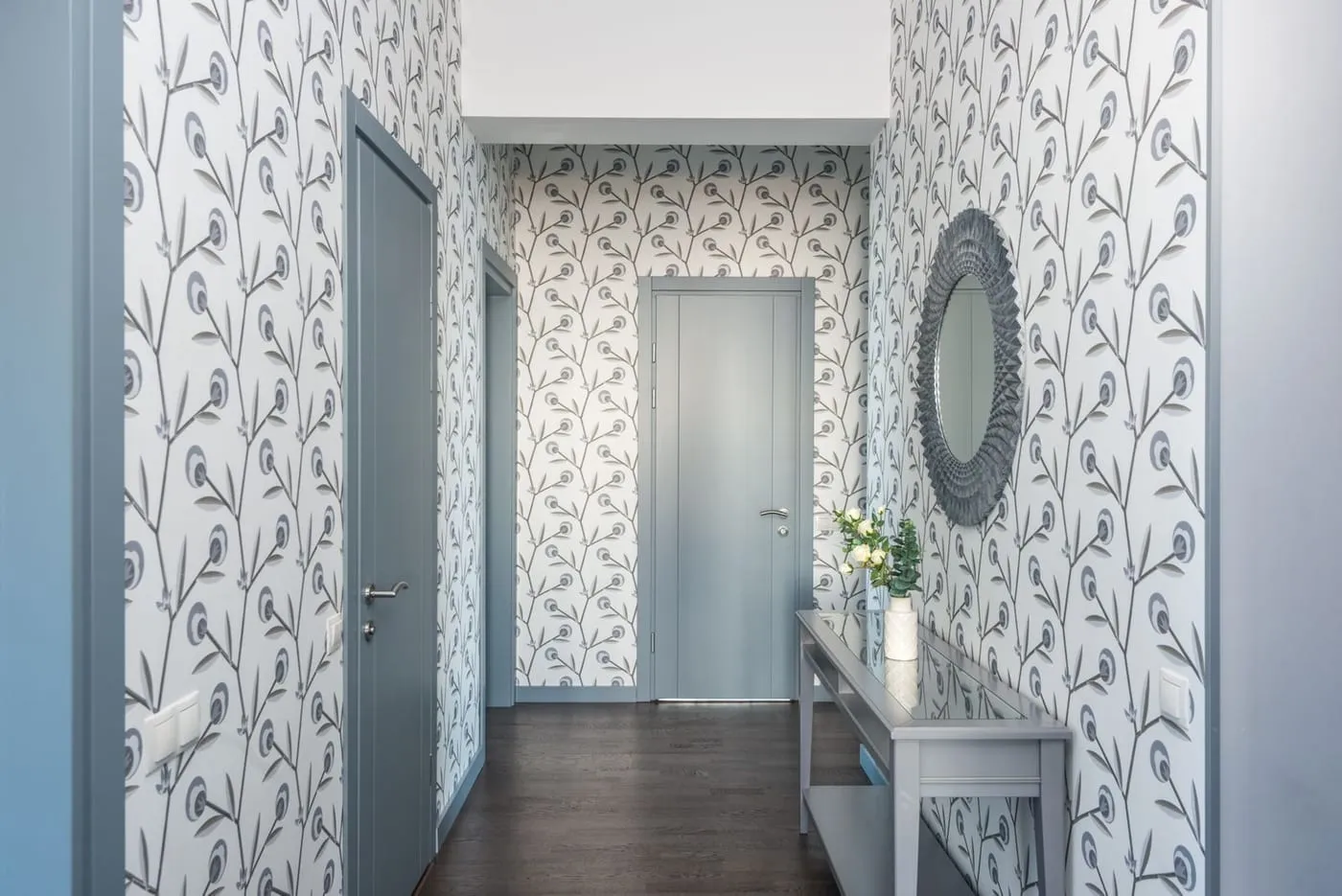
A slim console table at 25–30 cm depth fits in a hallway without blocking circulation when the corridor is 100 cm or wider. It provides a surface for keys, mail, and small items — and can hold a small drawer unit underneath for more organized storage.
What to put on it: A key bowl or hook for keys, a small tray for daily-carry items (transit card, lip balm, earbuds), a plant or small lamp to make the hallway feel like a transition zone rather than just a corridor.
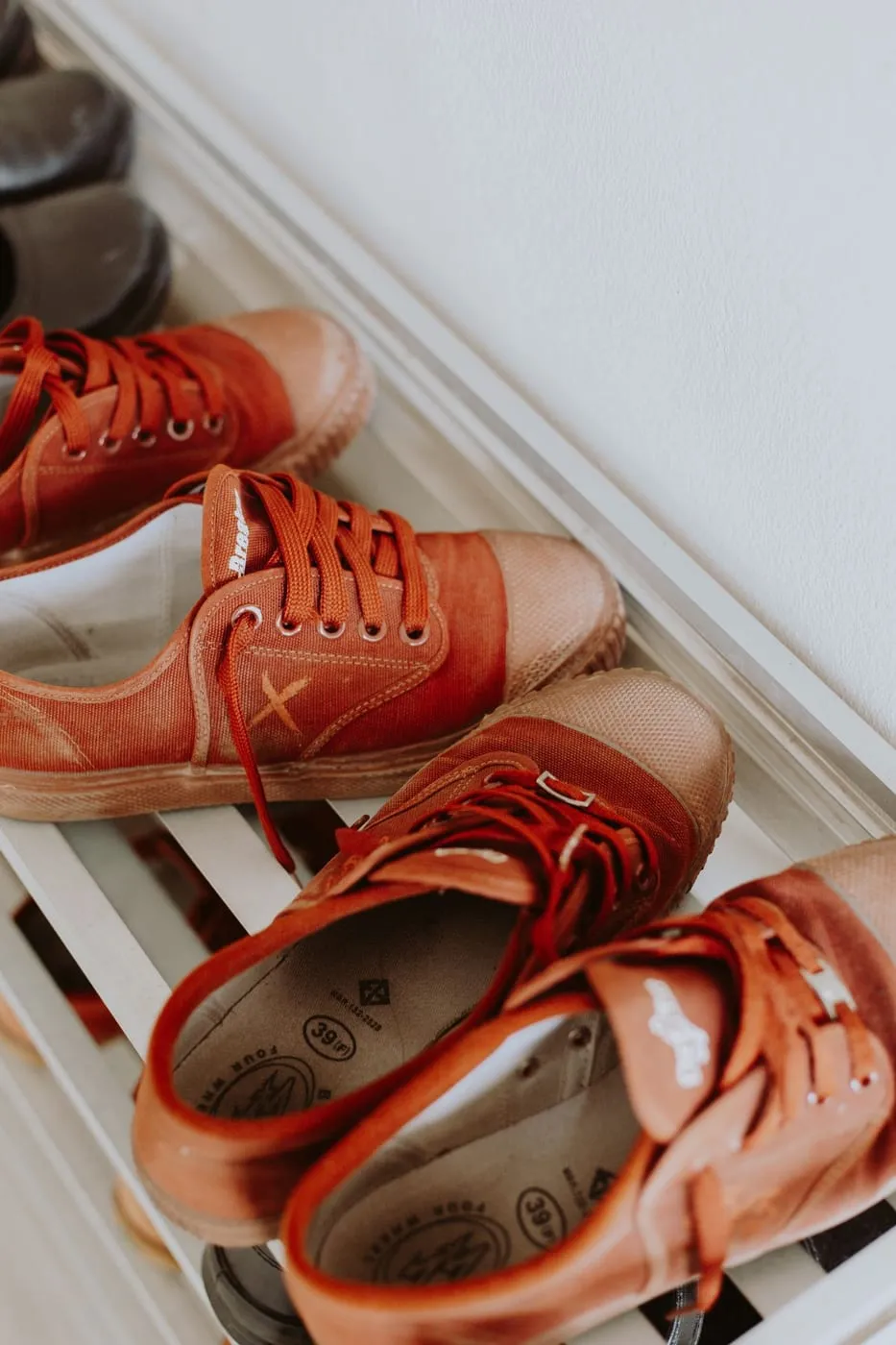
What to put underneath: A small basket for shoes, a slim recycling bag, or a door mat. Not a large shoe rack — the floor under a console table in a narrow hallway is not a high-volume storage zone.
Canadian options:
- IKEA LUNNARP (~$100, 26 cm deep): Slim bamboo console, fits most Canadian apartment hallways
- Amazon.ca slim console tables (~$60–$120): Wide variety of finishes, most in the 25–30 cm depth range. Look for one with a drawer for the key-and-mail zone.
- HomeSense / Winners (~$80–$150): Good selection of solid wood slim tables seasonally
Solution 3: Hooks and a Mirror
The combination of a hook rail and a large mirror solves two problems at once: coat and bag storage, and the dark-narrow-hallway visual problem.
Hook placement
Mount hooks at 165–175 cm height — accessible for adults without reaching overhead. A row of 4–5 hooks across a wall segment handles coats, bags, and umbrellas for a household of two.
No-drill option: Command Large hooks ($5–$8 each at Canadian Tire or Amazon.ca) hold up to 3.6 kg each. A coat on a hanger weighs 0.5–1.5 kg — well within capacity. For heavier items (winter parkas, large bags), use screwed hooks — a parka can exceed 3 kg.
Mirror placement
A full-length leaner mirror (100 cm+ tall) at the end of the hallway or on a side wall reflects the corridor length back on itself — the hallway reads as longer than it is. In a dark hallway, the mirror also bounces any available light (from a window at the corridor end, or from the rooms on either side) back through the space.
No-installation option: A leaner mirror sits against the wall with no mounting. Best at the end of the corridor or angled in a corner.
Cost: IKEA NISSEDAL mirror ($80), or leaner mirrors at HomeSense ($60–$150).
Solution 4: Over-Door Organizers
The back of a door in or near the hallway — a coat closet door, a bathroom door, a linen closet door — is available storage that most apartment renters ignore.
An over-door organizer with pockets holds:
- Umbrellas (one large pocket each)
- Reusable shopping bags (folded)
- Hats and scarves
- Small bags and pouches
The organizer hangs on the door with a hook set — no mounting, no damage. When the door opens, the organizer clears the frame. A pocket over-door organizer with 6–8 large pockets ($20–$35 at Amazon.ca) fits most standard Canadian apartment doors.
Solution 5: Vertical Cabinet (120 cm+ hallways)
A tall narrow cabinet (30–35 cm deep, 40–50 cm wide, 180 cm tall) provides the most storage volume of any hallway solution. Closed cabinet doors hide everything inside — the hallway stays visually clean even when the cabinet is full.
Use it for: coats on hooks inside the cabinet, shoes on a low shelf, sports equipment, umbrellas in a door-mounted holder, bags.
Canadian options:
- IKEA STUVA storage combination (~$150–$200): 60 cm wide × 30 cm deep, available with doors. Works in hallways wider than 120 cm.
- IKEA HEMNES shoe cabinet with drawers (~$250): 89 cm wide, 30 cm deep, specifically designed for entryway use.
- Wayfair Canada tall hallway cabinets (~$150–$350): Various widths from 35–60 cm, door options, often with a mirror on the front.
Hallway Lighting
A dark hallway with a single overhead fixture is both uninviting and practically dim. Two improvements that work without an electrician:
Plug-in wall sconce: A plug-in lamp with a cord that runs to the nearest outlet. The cord hides against the wall with cable clips ($3–$5 at Canadian Tire). Adds warm ambient light at eye level. IKEA carries plug-in wall lamps from $20–$60.
LED motion sensor light: A battery-powered LED motion sensor light strip or puck light mounted under a shelf or inside a cabinet activates when someone enters the hallway. No wiring, no switching on manually. Amazon.ca, ~$10–$25 for a 2-pack.
Full Hallway Setup by Width
| Hallway width | Best setup |
|---|---|
| Under 90 cm | Hooks only + floating shelf at 185 cm + mirror |
| 90–100 cm | Hooks + floating shelf + over-door organizer on nearby door |
| 100–110 cm | Hooks + slim console table (25 cm deep) + mirror |
| 110–120 cm | All of the above + small bench or shoe rack beside table |
| 120 cm+ | Narrow tall cabinet + hooks + mirror |
For the specific entryway zone right at the front door, entryway storage for small apartments covers hooks, key storage, and shoe containment in detail. And for shoe storage that extends from the entryway into the bedroom closet, shoe storage for small apartments covers the full system.