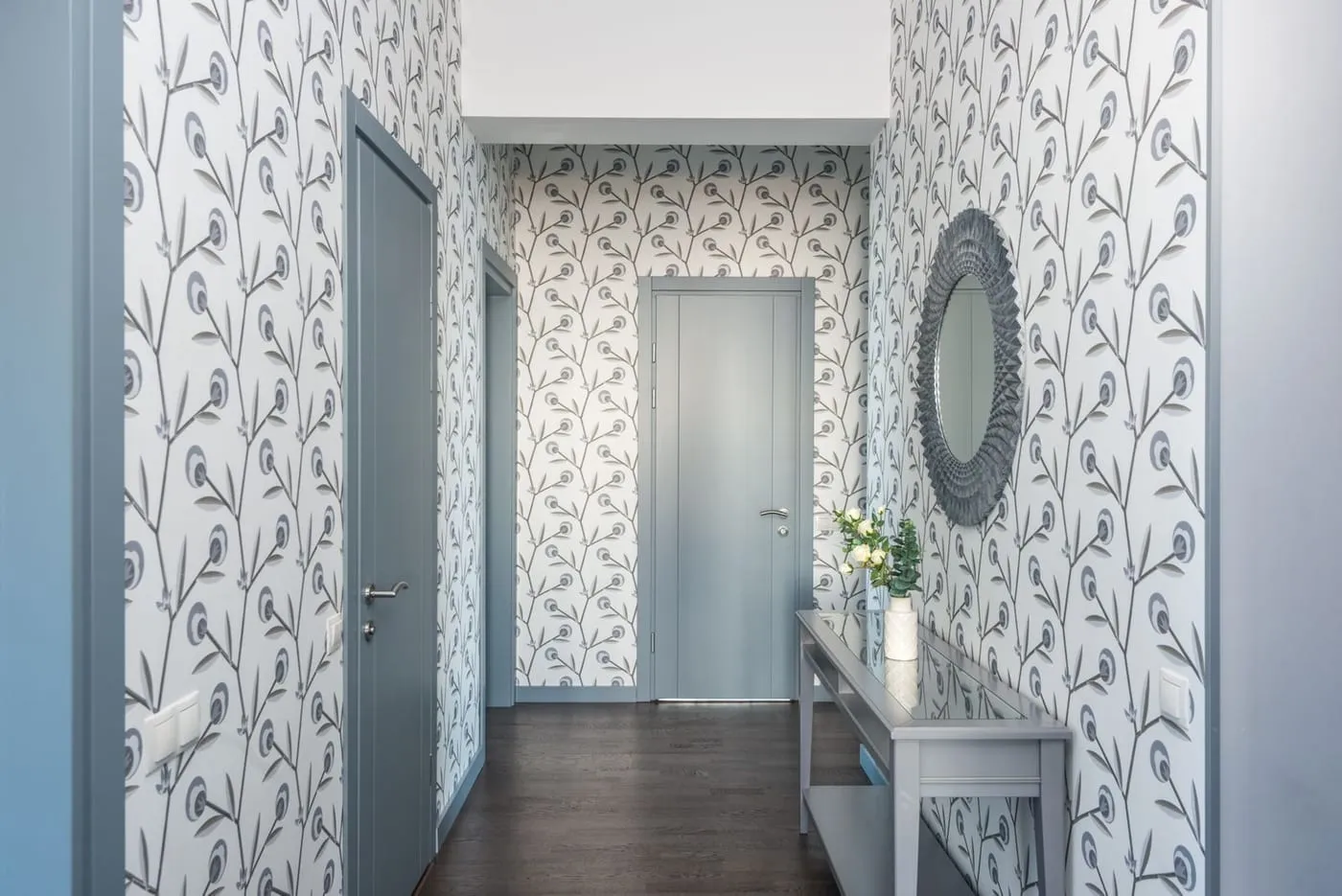
The entryway of a Canadian apartment takes more daily stress than any other zone. It is where snow boots come off in January, wet umbrellas land in March, and groceries get dropped in November. In most apartments — particularly in newer buildings where the front door opens directly into the main living area — there is no mudroom, no hallway bench, and often no wall space for a proper coat hook.
Apartments in buildings of five or more storeys made up 10.7% of all Canadian dwellings as of the 2021 Census (Statistics Canada, 2021), and most of those newer high-rise units are built with exactly this layout — front door opening straight into the living space, no mudroom buffer in between.
The goal of entryway storage in a small apartment is not decoration. It is function: coats off quickly, shoes contained, keys findable, and the living space protected from the outdoor chaos that follows everyone through the door.
What Every Entryway Needs
No matter how small the entry zone:
Key takeaway: Every functional apartment entryway needs three elements regardless of size: hooks for coats and bags (at least one per person plus a spare), a dedicated surface or hook for keys, and a shoe containment system such as a rack or tray to prevent trip hazards and visual clutter.
1. Hooks for coats and bags — at least one per person in the household, plus one spare. A coat draped over a chair means the entryway system failed.
2. A surface for keys — a single hook or small tray dedicated to keys. Keys that are “somewhere near the door” cost 5 minutes of searching every other day.
3. Shoe containment — a rack, a tray, or a bench with storage. Shoes left loose on the floor are a trip hazard and visually clutter the entire entry area.
These three things — hooks, key storage, shoe containment — form the minimum entryway system. Everything else (a mirror, a console table, a plant) is optional layering on top.
Hooks: The Most Important Element
Hook rail (wall-mounted)
A row of 3–5 hooks on a horizontal rail is the cleanest entryway solution and the most space-efficient. The rail installs with 2–4 screws and holds the weight of coats, bags, and umbrellas at the hook points.
Canadian options:
- IKEA TJUSIG hook rail (~$20–$25): 5 hooks on a 78 cm rail, white or black. One of the most popular apartment entryway products in Canada.
- IKEA ENUDDEN (~$15): 5 hooks on a 60 cm rail, simpler design, slightly lower price.
- Amazon.ca hook rails (~$15–$35): Wide variety, shaker-style and modern finishes available. Look for rails with at least 3 mm thick hooks — thin hooks bend under coat weight over time.
Mounting for renters: Two screws per rail, typically into drywall. Use toggle bolts if there is no stud in the right position — a rail holding coats needs secure mounting. The holes patch at move-out with standard spackle.
Freestanding coat rack
Zero wall installation. A freestanding coat tree holds 6–8 coats and bags on radiating hooks at the top, with an umbrella ring at the base. Stands in a corner beside the door.
Trade-off: Takes more floor space than a wall rail (a coat tree footprint is roughly 40 × 40 cm at the base), and tips if overloaded on one side. Best for apartments where wall mounting is not possible.
Cost: $30–$70 at Amazon.ca, Canadian Tire, or HomeSense. For a narrow hallway table that also anchors the space, this slim console table (~$80–$100 CAD, 34 cm deep × 120 cm wide) fits most Canadian apartment entryways without blocking the path.
Over-door hooks
An over-door hook rack on the back of the front door holds 4–8 coats and bags with no wall mounting and no door modification. Works when the door opens inward and there is clearance behind it.
Cost: $15–$30 at Amazon.ca or Canadian Tire.
Key Storage
A dedicated key hook — separate from the coat hooks — prevents the “where are my keys” problem entirely. Mount it at eye level beside the door, not mixed in with coat hooks where keys can be buried under jackets.
Options:
- Single hook (command strip mounted): A Command medium hook ($5–$8) at eye level holds keys for 2–3 people. Adhesive-mounted, no drilling, removable.
- Small key cabinet (Amazon.ca, ~$20–$40): A small wall-mounted box with hooks inside, often with a magnetic closure. Holds multiple sets of keys, small mail, and a pen. Requires 2 screws.
- Key hook with shelf (Amazon.ca, ~$15–$30): A hook bar with a small shelf above for mail, sunglasses, or a phone. Consolidates the “landing zone” into one piece.
Shoe Storage in the Entryway
See the full shoe storage guide for complete options. For the entryway specifically, the constraint is depth: the shoe storage solution should be 25 cm deep or less to avoid blocking the path from the door.
Slim options under 25 cm deep
IKEA TJUSIG shoe rack (~$25): 22 cm deep, holds 4–6 pairs on two tiers. Matches the TJUSIG hook rail above for a coordinated entryway set.
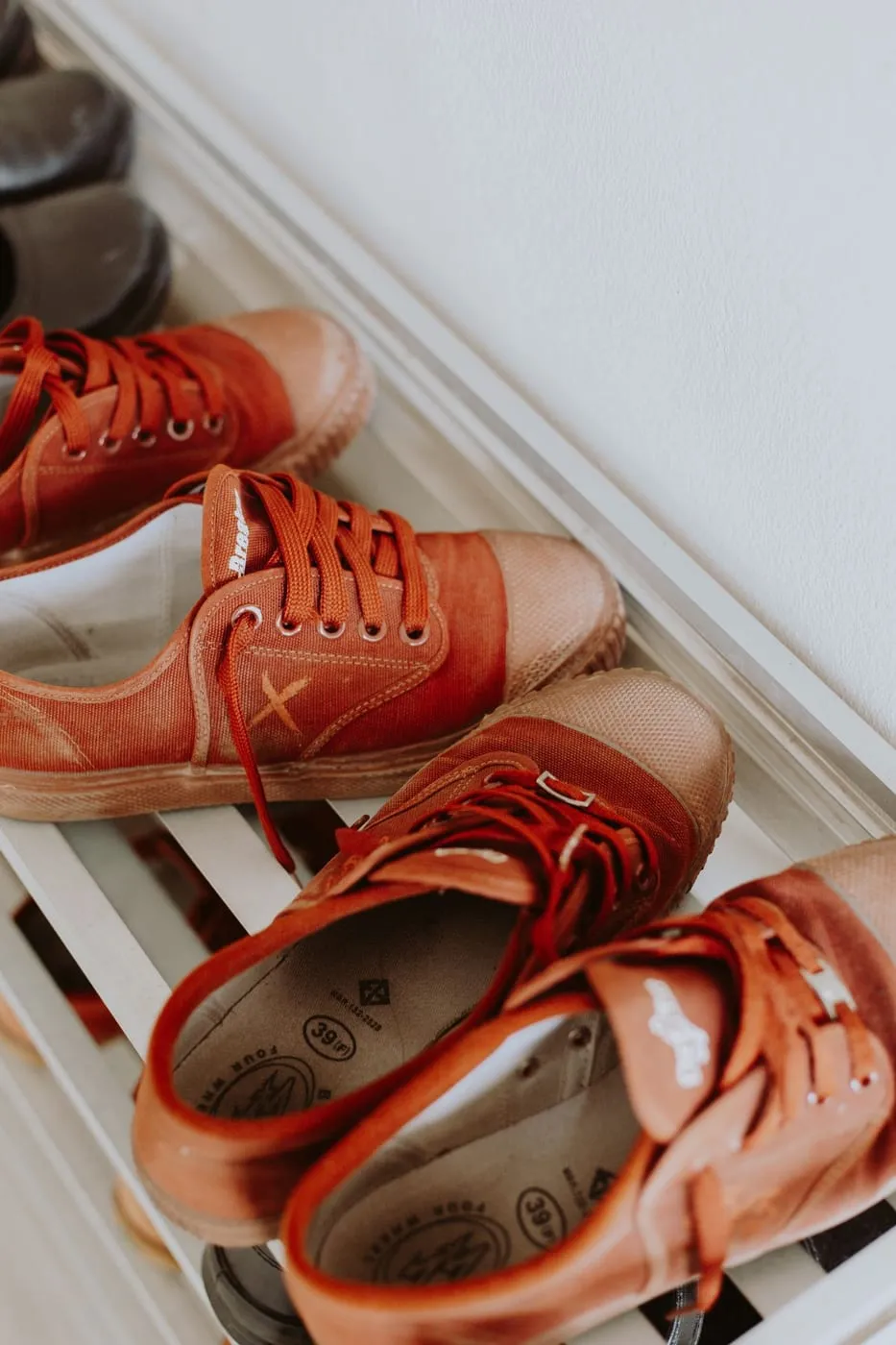
3-tier angled shoe rack (Amazon.ca, ~$20–$35): Angled racks place the toe down and the heel up, requiring less depth per pair (18 cm) than flat storage (25 cm). Holds 6–9 pairs in a compact footprint.
Entryway bench with shoe shelf (~$80–$180): 30–35 cm deep — slightly more than the minimum but adds seating for putting shoes on and a surface for bags. Worth the extra depth if the entryway has the space.
The Entryway Console Table Setup
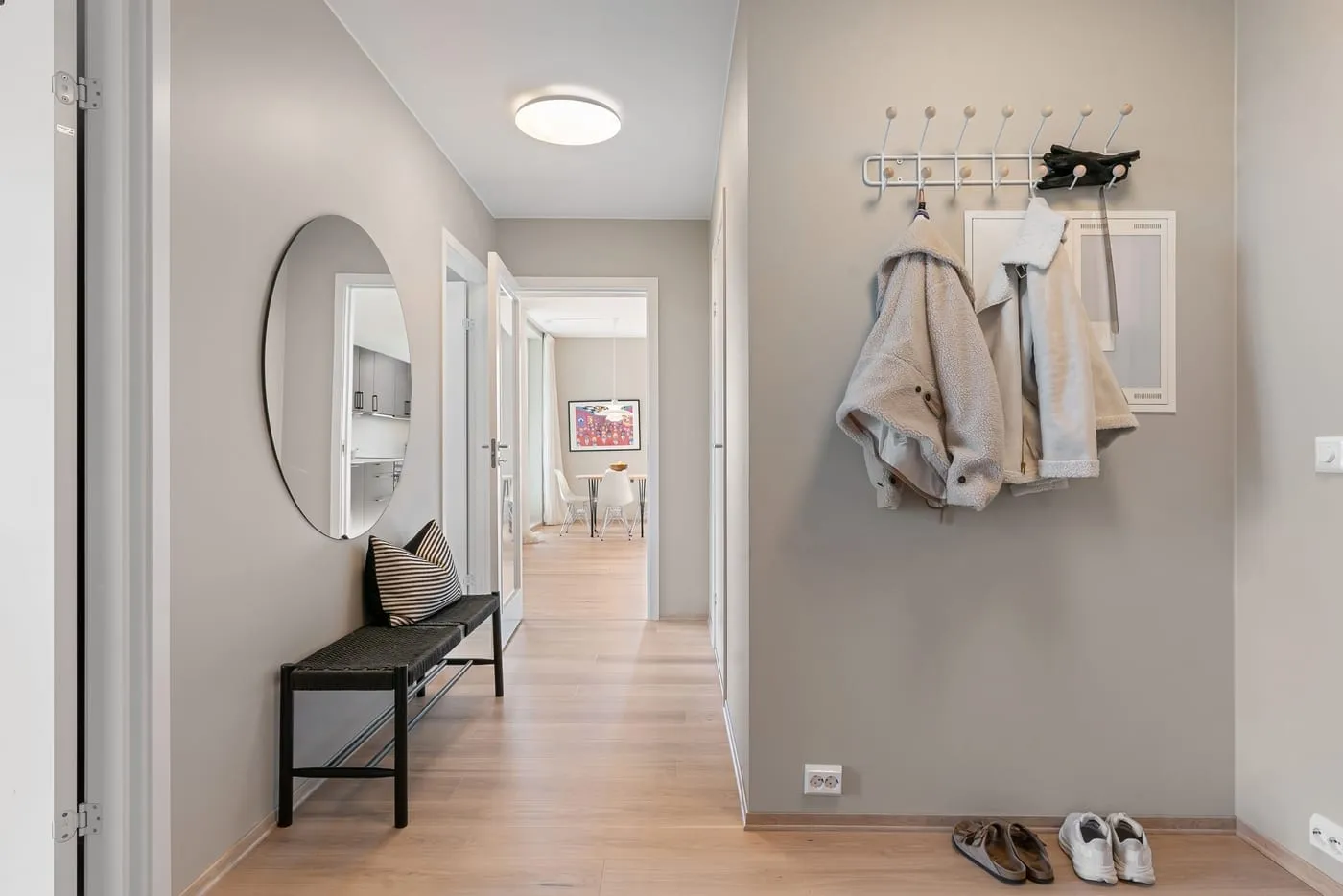
If the apartment has a narrow wall beside the door — typical in apartments where the entry opens to a short corridor before the living area — a slim console table (25–30 cm deep) combined with a hook rail above and a shoe rack below creates a complete entryway station:
- Hook rail at 170–180 cm: coats and bags
- Console table at 80 cm height: keys, mail, small items land here
- Shoe rack on the floor below or beside the table: shoes contained
This three-tier setup functions as a proper entryway without requiring a dedicated room. Console tables at 25–30 cm depth are available at IKEA (LUNNARP, $100), Amazon.ca ($60–$120), and HomeSense (~$80–$150).
No-Wall-Space Solutions
Some apartments have no wall beside the door — the door opens directly into an open living area with no wall to mount anything on. Options:
Freestanding coat rack beside the door: Stands on the floor next to the door, no wall contact needed.
Narrow bookshelf as entryway divider: A KALLAX 1×4 or similar narrow shelf placed perpendicular to the wall beside the door creates a pseudo-entryway zone. The back of the shelf faces the living area; hooks mount to the side panel facing the door.
Over-door setup only: If only the back of the front door is available, an over-door hook rack + over-door shoe organizer handles both coats and shoes entirely on the door.
Canadian Entryway Products at a Glance
| Product | Where | Price CAD |
|---|---|---|
| IKEA TJUSIG hook rail (5 hooks) | IKEA Canada | $20–$25 |
| IKEA TJUSIG shoe rack | IKEA Canada | $25 |
| Freestanding coat tree | Amazon.ca, Canadian Tire | $30–$70 |
| Over-door hook rack | Amazon.ca, Canadian Tire | $15–$30 |
| Command hook (large, adhesive) | Canadian Tire, Walmart | $5–$8 |
| Key hook with shelf | Amazon.ca | $15–$30 |
| Slim console table (25–30 cm deep) | IKEA, Amazon.ca, HomeSense | $60–$150 |
| Entryway bench with shoe shelf | Wayfair Canada, Amazon.ca | $80–$180 |
A complete functional entryway — hook rail, slim shoe rack, and key hook — costs $60–$80 at IKEA or Amazon.ca and takes under an hour to set up.
For the hallway beyond the entryway, hallway storage ideas for narrow corridors covers the full corridor storage system. For hanging storage above the console table, floating shelves: renter-friendly options in Canada covers no-drill and drill-required mounting side by side.