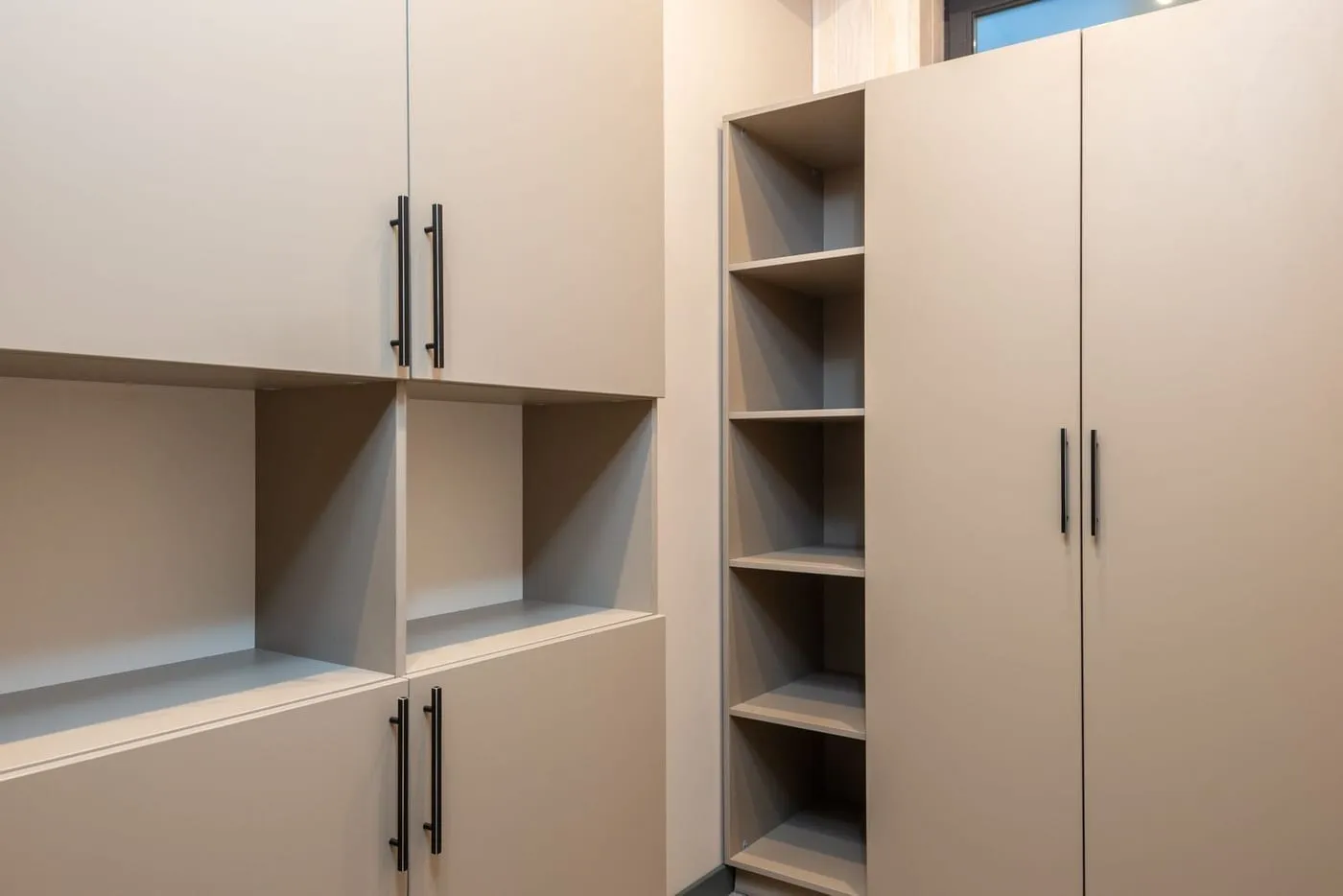
A small bedroom organization system means three things working together: a decluttering method you actually repeat, zones that separate sleep from storage from work, and containers inside your existing furniture that stop drawers and shelves from turning back into junk piles. Most small bedroom advice skips straight to buying bins. That’s backwards. [PERSONAL EXPERIENCE] In my own 510 sq ft Toronto rental, the bins didn’t fix anything until I fixed the system underneath them first.
TL;DR: Zone the room before buying anything: sleep, storage, and (if you work from home) a small work corner. Declutter one drawer or shelf at a time using keep/donate/trash, not the whole room in one sitting. Inside drawers, group by category with dividers so nothing collapses into a pile. Redo the whole system twice a year, timed to the seasonal clothing swap.
Key Takeaways
- Zone the room first (sleep, storage, work) before buying a single organizer
- Declutter one drawer or shelf per session using keep/donate/trash — not the whole room at once
- Drawer dividers (~$10-15 CAD) stop folded clothes from collapsing into a pile within a week
- Canadian households report holding onto unused items for years; the biggest bedroom clutter source is clothing kept “just in case” (Salvation Army Canada donation surveys, 2024)
- Rebuild the system twice a year, not constantly — a system needing weekly resets is the wrong system
How Do You Zone a Small Bedroom That Has to Do More Than One Job?
Zoning means giving each part of the room one job, so a 100 sq ft bedroom that has to sleep, store, and sometimes work doesn’t blur into one cluttered mess. Interior designers use this exact approach in studio apartments, where every square foot needs a defined purpose or it defaults to storage overflow.
In a small Canadian apartment bedroom, there are usually three candidate zones: sleep, storage, and (for the many renters now working from home at least part-time) a small work corner. Not every bedroom needs all three. But naming them, even mentally, changes how you use the space.
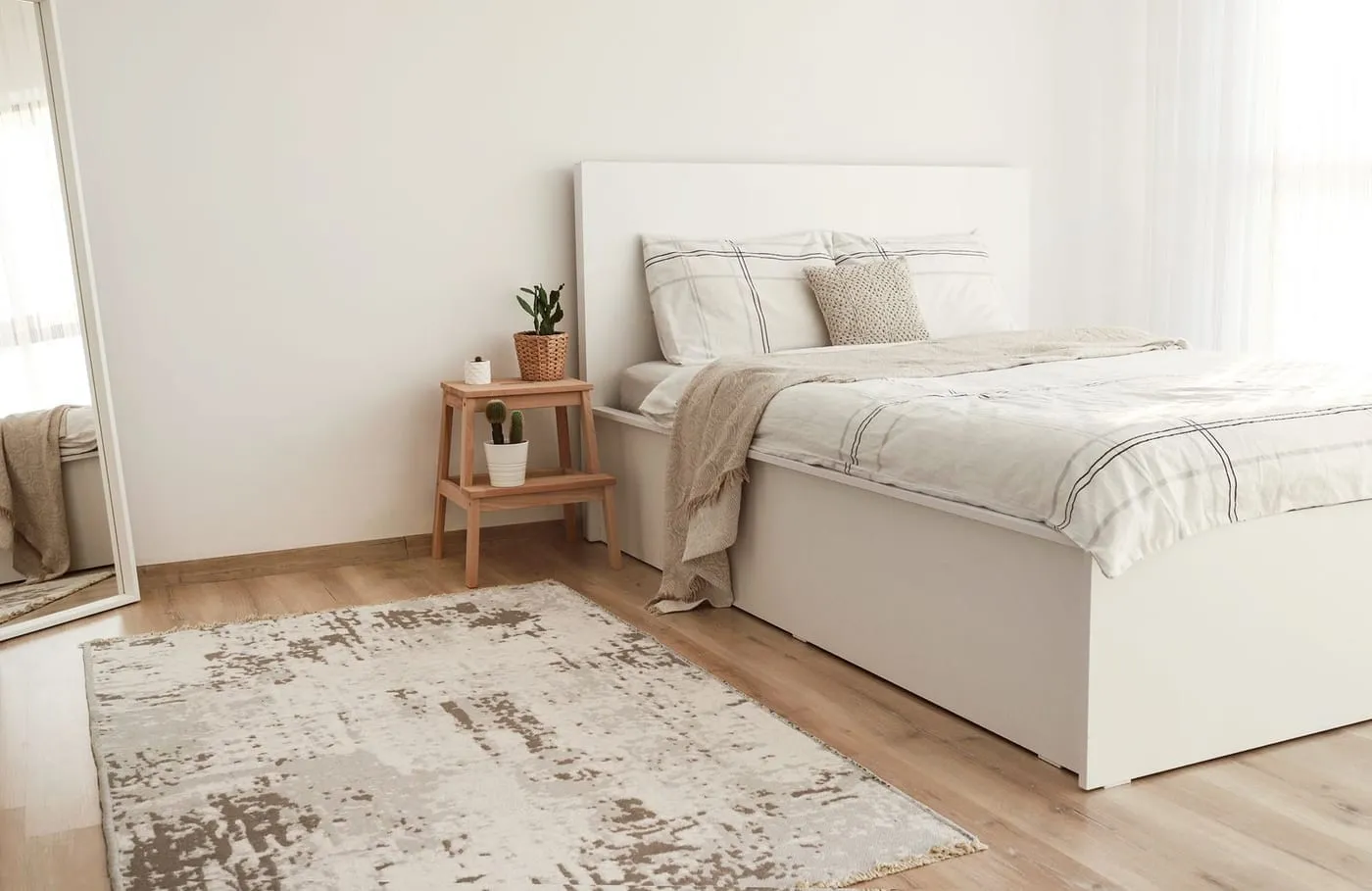
The sleep zone is the bed plus enough clearance to walk around it. Nothing else belongs here. If your nightstand has become a catch-all for mail, chargers, and half-read books, it’s bleeding into a storage zone it was never meant to hold.
The storage zone is the closet, dresser, and under-bed area. This is where the bulk of your belongings should physically live; if items are stored outside this zone (piled on the floor, draped over a chair), that’s a sign the storage zone itself needs a system, not that you need more zones.
The work zone, if you have one, should be the smallest footprint that works. [UNIQUE INSIGHT] We’ve found that a corner desk under 60 cm deep, positioned so you can’t see the bed from the chair, keeps the “sleep” and “work” identities of the room from bleeding into each other, which matters more for actual sleep quality than most decor advice acknowledges.
A rug is the easiest no-drill way to define a zone without touching a wall. A small area rug (~$40-60 CAD, IKEA or Structube) under a desk and chair visually separates “work” from “sleep” even in a single open room.
[IMAGE: small bedroom zoned with rug marking work corner separate from bed - search “small bedroom desk corner rug”]
[INTERNAL-LINK: small bedroom decor ideas → /blog/small-bedroom-decor-ideas for the visual/colour side of the same room]
What’s a Decluttering Method That Actually Sticks in a Small Bedroom?
The method that sticks is one drawer or one shelf at a time, sorted into keep, donate, and trash, done in 20-30 minute sessions rather than one exhausting weekend. Professional organizers consistently recommend this incremental approach because whole-room declutters have a high abandonment rate; splitting the job into small, finishable chunks means you actually complete each one.
The one-zone method, step by step:
- Pick one drawer, one shelf, or one closet section. Nothing bigger.
- Empty it completely onto the bed.
- Sort into three piles: keep (used in the last year, has a clear purpose), donate (good condition, not needed), trash (broken or expired).
- Put back only the keep pile, and only in a way that leaves visible gaps, not a tight fit.
- Bag the donate pile immediately and put it by the door. Waiting even a day drops the odds it actually leaves the apartment.
[PERSONAL EXPERIENCE] The step people skip is #4. If everything you kept fits back in with zero room to spare, you haven’t actually decluttered, you’ve just repacked the same volume more neatly. A properly decluttered drawer should close without you having to press down on it.
Canadians donate large volumes of clothing and household goods to organizations like Diabetes Canada and the Salvation Army every year, much of it items that sat unused for a long stretch before being cleared out (Salvation Army Canada, 2024). The bedroom closet and dresser are consistently among the top sources of donated items in home decluttering drives, which tracks with how much of a small bedroom’s clutter is really clothing, not clutter in the general sense.
When to redo it: Twice a year lines up naturally with the seasonal clothing swap most Canadian renters already do each spring and fall. Trying to declutter monthly usually means the storage system itself doesn’t match how you actually live, not that you’re bad at tidying.
[CHART: Bar chart - time investment comparison, “whole-room declutter (one 6-hour session, high abandonment)” vs “zone-based declutter (six 30-minute sessions across two weeks)” - source: professional organizer methodology]
[INTERNAL-LINK: small closet organization for rental apartments → /blog/small-closet-organization-rental-apartment for the closet-specific deep dive]
How Do You Set Up a Drawer System That Doesn’t Collapse Into a Pile?
A drawer organization system needs physical dividers and a consistent category rule, or folded clothes will collapse into a single pile within about a week regardless of how neatly you fold them. This is the single most common failure point in bedroom organization: the folding was fine, the system to keep it that way wasn’t there.
The category rule: Assign each drawer one category and stick to it. Underwear and socks in one drawer, using small dividers or repurposed shoeboxes to keep pairs from migrating. T-shirts in another, folded and stood upright (filing style) rather than stacked flat, so pulling one shirt doesn’t collapse the stack above it.
Drawer dividers: A basic set of fabric or bamboo drawer dividers runs about $10-15 CAD at Dollarama or Canadian Tire, or $18-26 CAD for a sturdier bamboo set from Amazon.ca. You don’t need branded organizers; a cut-down shoebox or cereal box works nearly as well for the first few months while you test what categories you actually need.
The filing fold, not the flat stack: Folding shirts so they stand vertically in a row, like files in a cabinet, means you see every item at a glance instead of digging through a stack and disturbing everything below it. This one change, more than any bin purchase, is what keeps a drawer from re-cluttering.
[UNIQUE INSIGHT] Most bedroom organization content treats the dresser as a solved problem once you own dividers. In practice, the fold method matters more than the container, we’ve seen the same $12 CAD divider set fail in a flat-stack drawer and work perfectly in a filed one.
One drawer, one function: Resist mixing categories in a single drawer “because there’s room.” A junk-drawer mentality inside a dresser defeats the entire point of a system; if a drawer needs a catch-all, give it exactly one, clearly labelled, rather than letting every drawer slowly become one.
[IMAGE: dresser drawer with clothes folded vertically filing-style with dividers - search “drawer organization filing fold dividers”]
[INTERNAL-LINK: small apartment bedroom storage ideas → /blog/small-apartment-bedroom-storage-ideas for the furniture and product roundup that pairs with this system]
What Under-Bed Storage System Actually Works Long-Term?
An under-bed storage system works long-term when it’s organized by category and season, not just shoved under as loose overflow, because unlabelled under-bed storage becomes a black hole nobody revisits until moving day. The space itself is valuable; a system for what goes in it is what makes it usable.
Category, not chaos: Assign each under-bed bin or bag a single category: off-season clothing, extra bedding, out-of-rotation shoes. IKEA SKUBB flat bags (~$14 CAD for two) work well because they’re clear enough to identify contents without unzipping every bag.
Label the outside: A strip of masking tape and a marker turns a guessing game into a two-second glance. This sounds almost too simple to mention, but it’s the difference between an under-bed system you actually use and one you forget entirely.
Rotate with the seasons: Sync the under-bed system to the same twice-yearly rebuild as your drawers and closet. Summer bedding goes under the bed in October; winter bedding comes out. This keeps the system from silently filling with things that no longer belong there.
What never goes under the bed: Anything you need daily, anything that traps moisture (damp gear, unwashed laundry), and anything you’d forget existed for a year. If you can’t recall what’s in a bin without checking, it’s stored wrong, not stored well.
Statistics Canada data shows a large share of Canadian renter households live in units under roughly 800 sq ft, particularly in Toronto, Vancouver, and Montreal, where bedroom footprints are correspondingly tight (Statistics Canada, Census of Population, 2021). That reality is exactly why an under-bed system, not just under-bed storage, matters: the square footage itself isn’t growing, so how you organize it has to do the work.
[INTERNAL-LINK: under-bed storage ideas for small apartments → /blog/under-bed-storage-ideas-small-apartment for risers, bin types, and what never to store under a bed]
How Do You Keep a Small Bedroom Organization System From Falling Apart?
A bedroom organization system survives long-term through one short daily habit and one seasonal rebuild, not through buying more containers when things get messy again. Most systems don’t fail because they were designed badly; they fail because nothing maintains them.
The 5-minute nightly reset: Before bed, put back anything that’s landed outside its zone: clothes off the chair, mail off the nightstand, shoes into the closet. Five minutes, done nightly, prevents the slow slide back into clutter far better than an occasional deep clean.
The one-in, one-out rule for clothing specifically: Because clothing is the single biggest volume driver in a bedroom, apply one-in-one-out here even if you don’t elsewhere. A new sweater in means an old one out, decided at the moment of purchase, not left for the next declutter session.
The twice-yearly full rebuild: Spring and fall, redo the whole system: empty every zone, re-sort, re-file, relabel the under-bed bins. This is also when you catch zones that have quietly stopped working, maybe the work corner never gets used and should become storage instead.
[PERSONAL EXPERIENCE] The system that’s lasted for me isn’t the fanciest one. It’s the one I could actually keep doing every single night without it feeling like a chore. That’s the real test of any bedroom organization system: not how good it looks the day you build it, but whether it’s still standing in six months.
[INTERNAL-LINK: small apartment organization → /blog/small-apartment-organization for the same zone-and-declutter system applied to the whole apartment]
Frequently Asked Questions
Below are quick answers to the questions Canadian renters ask most about organizing a small bedroom.
How do I organize a small bedroom if I don’t have furniture to work with yet? Start with zoning, not furniture. Mark a sleep zone, a storage zone, and (if needed) a work zone using a rug or the room’s existing layout, before buying anything. Once the zones are clear, you’ll know exactly what to buy instead of guessing. Furniture comes second.
What’s the fastest way to declutter a small bedroom before organizing it? Empty one drawer or shelf completely, sort everything into keep, donate, and trash, then put back only what earns its space. Doing one zone per session (20-30 minutes) beats trying the whole room at once, which is how most declutter attempts stall out.
How often should I redo my bedroom organization system? Twice a year is enough for most Canadian renters, timed to the seasonal clothing swap (roughly April and October). A system that needs constant rebuilding isn’t the right system. If you’re re-sorting every month, the zones or bins don’t match how you actually live.
Can I organize a small bedroom without buying anything new?
Yes, largely. Zoning costs nothing. Decluttering costs nothing. Repurposing a shoebox as a drawer divider costs nothing. The only real spend most renters need is under-bed bags ($14 CAD) and maybe drawer dividers ($10-15 CAD), the system matters more than the products.
The Small Bedroom Organization Priority Order
- Zone the room — sleep, storage, work (if needed), before buying anything
- Declutter one zone at a time — 20-30 minute sessions, keep/donate/trash
- Set up drawer categories — one category per drawer, filed not stacked
- Build the under-bed system — labelled, categorized, rotated seasonally
- Maintain with a 5-minute nightly reset — and a full rebuild twice a year
A system beats a shopping list every time. Get the zones and the declutter method right first, and the bins you eventually buy will actually stay organized instead of becoming one more thing to tidy.
→ For the visual and layout side of the same room, see small bedroom decor ideas. For the furniture and product roundup, see small apartment bedroom storage ideas. And for this same zone-and-declutter approach applied to the rest of the apartment, see small apartment organization.