Storing a bike in a small apartment comes down to three renter-safe options: a no-drill wall hook ($20–$35 CAD), a freestanding vertical floor stand ($30–$60 CAD), or your building’s bike room if it has one. Each keeps the bike off the floor and out of your walking path without risking your damage deposit.
I’ve lived in three different rental units in Toronto and Ottawa with a bike and no garage, no storage locker, and — in one case — a landlord who flatly said no drilling in the hallway. What follows is what actually worked, what wrecked a wall the one time I rushed it, and where I’d spend money versus skip it entirely.
TL;DR: Try your building’s bike room first (free, ask property management). If there’s none, a tension-mounted vertical rack ($40–$70 CAD, zero drilling) is the safest bet for a full deposit refund. A single stud-mounted wall hook ($20–$35 CAD) is cheaper and just as tidy if you’re allowed one small hole. Skip floor-only stands in tight entryways — they still eat 30+ cm of width you may not have.
Why Does a Bike Take Over a Small Apartment So Fast?
A standard adult bike is roughly 175 cm long and 60 cm wide when parked on both wheels, which is almost the entire width of a typical rental hallway or entryway. Turning it vertical, wheel against the wall, drops that footprint to about 30 cm — the same width as a narrow bookshelf.
That’s the whole problem in one sentence: bikes are designed to be ridden horizontally, not stored in a 500 sq ft apartment. Every storage method below is really just a way to force the bike vertical, or out of the room entirely, without damaging a wall you don’t own.
My first Toronto rental had a 90 cm wide entryway. A bike leaned against the wall there meant squeezing past it every single day, and it fell over twice in one week, once onto a lamp. Getting it vertical on a $28 hook solved the problem in an afternoon.
What Are the Best No-Drill Wall Hooks for Bike Storage?
Command-rated bike hooks hold up to 35 lbs, enough for most aluminum and steel-frame bikes (typically 20–30 lbs), and remove without leaving marks or residue on drywall. They’re the safest starting point for anyone whose lease flatly bans holes.
What to look for:
- Weight rating — check your bike’s actual weight before buying; road bikes run lighter (18–22 lbs) than hybrids or e-bikes (30–50+ lbs, which need a stud-mounted hook instead)
- Adhesive surface area — bigger contact pads hold more weight and remove more cleanly
- Wheel or frame hook style — wheel hooks (bike hangs by the front tire) are gentler on paint than frame hooks
Budget picks in Canada:
- Command Large Utility Hooks (rated ~7.5 lbs each, use two) — ~$12–$15 CAD at Canadian Tire or Amazon.ca, best for very light bikes only
- Purpose-built adhesive bike hooks (rated 30–35 lbs) — ~$20–$30 CAD on Amazon.ca
- Steadyrack or similar tension-mount options — ~$60–$90 CAD, no adhesive or drilling at all, works on almost any wall
If your lease actually allows small holes (most do, within reason), a stud-mounted steel hook rated for 40+ lbs costs about $15–$25 CAD at Canadian Tire and is the sturdiest option for heavier hybrid or e-bikes. One screw into a stud, patched with a dab of spackle at move-out.
Should You Use a Vertical Floor Stand Instead?
A vertical floor stand is the right call if your lease bans all wall mounting, since it needs zero holes and zero adhesive, just a stable base holding the bike upright against a wall. Expect to pay $30–$60 CAD for a decent one at Canadian Tire or MEC.
Floor stands are freestanding, so they can tip if bumped, and they still take up a small footprint of floor space permanently (usually a 25–35 cm square). That’s the trade-off: no risk to the wall at all, but slightly less stable than a hook, and one more thing to walk around.
Where floor stands work best:
- Corners of a living room or entryway where a bike can lean flush against two walls
- Apartments where even Command hooks feel risky (some landlords specifically object to any adhesive on painted walls)
- Renters who move often and don’t want to reinstall wall hardware every time
I switched to a MEC floor stand (~$45 CAD) in my current place after moving twice in two years. Reinstalling wall hooks each move got old fast, and the stand just comes with me.
Can You Store a Bike on Your Balcony?
Yes, in most Canadian rentals, provided the bike doesn’t block the fire escape path or exceed any weight limit noted in your lease, though it’s worth confirming with your landlord first since some buildings prohibit it outright for insurance reasons. A quick email settles it either way.
Balcony storage keeps the bike fully out of your living space, which matters most in a studio or one-bedroom where every square foot of interior floor counts. A weatherproof bike cover (~$25–$40 CAD on Amazon.ca) protects it from rain and UV damage if it’s staying out year-round, and a simple balcony wall hook does the same no-drill job outdoors as it does indoors.
If your balcony doubles as your only outdoor lounging space, this is also where small apartment balcony storage ideas becomes relevant. Bikes, planters, and folding chairs all compete for the same narrow strip of railing and wall, and it’s worth planning the layout rather than just piling things up.
Balcony bike storage checklist:
- Confirm your lease and fire-escape clearance first
- Use a wall hook or vertical stand, never leaned flat across the walking path
- Cover it if left outdoors through Canadian winters (salt, freeze-thaw, and snow load all shorten a bike’s lifespan)
How Do You Store a Bike in an Entryway Without It Taking Over?
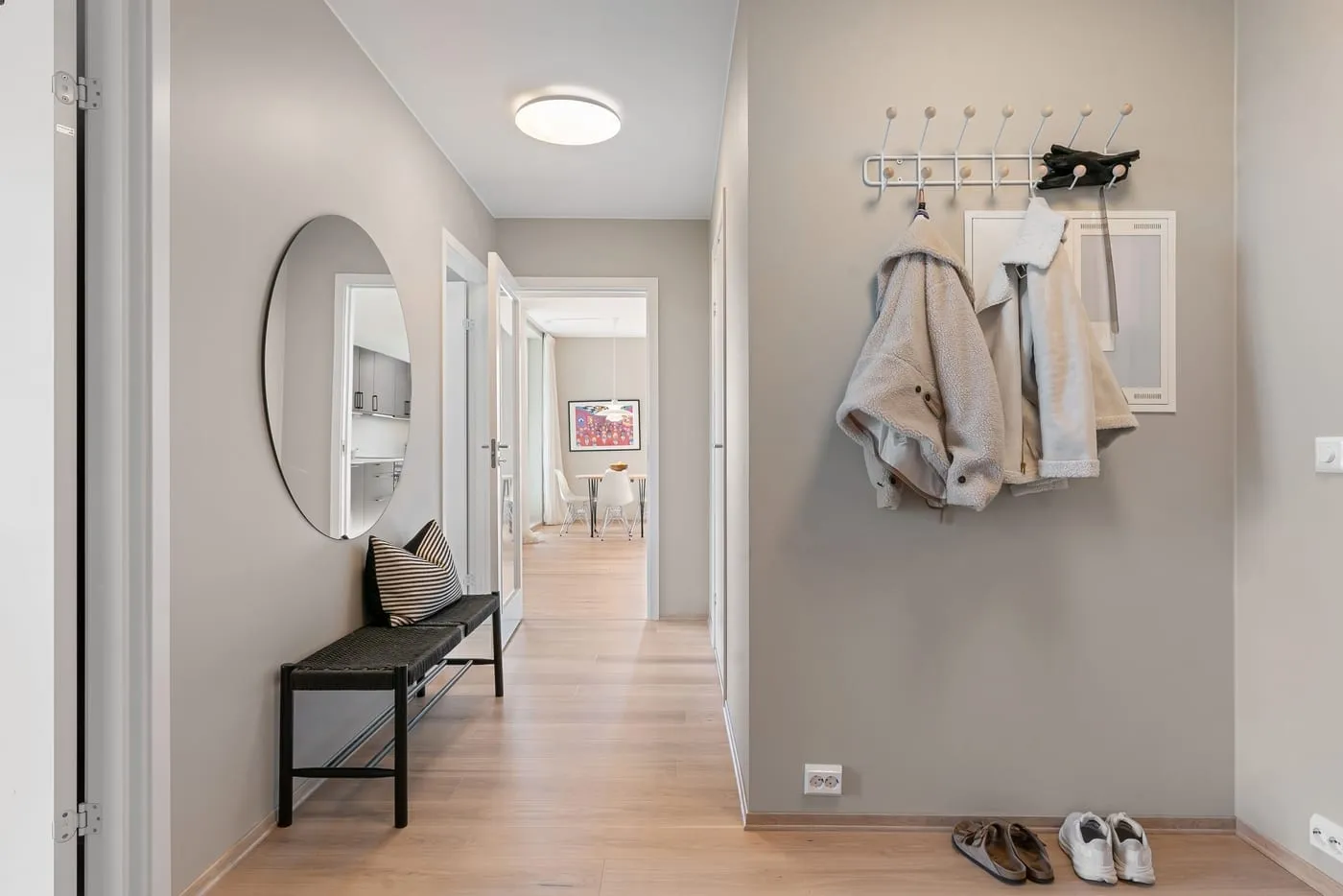
The answer is vertical placement plus a defined “zone,” meaning the bike gets one specific wall spot near the door rather than wherever it happens to land after a ride. A wall hook above an entryway console, for example, uses vertical space that’s otherwise empty.
Most guides treat bike storage and entryway storage as separate problems, but in a small rental they’re almost always the same 90 cm of wall. Planning them together, hook above, console or shoe rack below, gets more function out of one wall than solving each in isolation.
Pairing a wall hook with a slim console table underneath means the same wall does double duty: bike storage up top, keys, mail, and shoes below. Our guide to small entryway & hallway storage ideas covers the console and shoe-rack side of that combination in more depth.
Does Your Building Have a Bike Room?
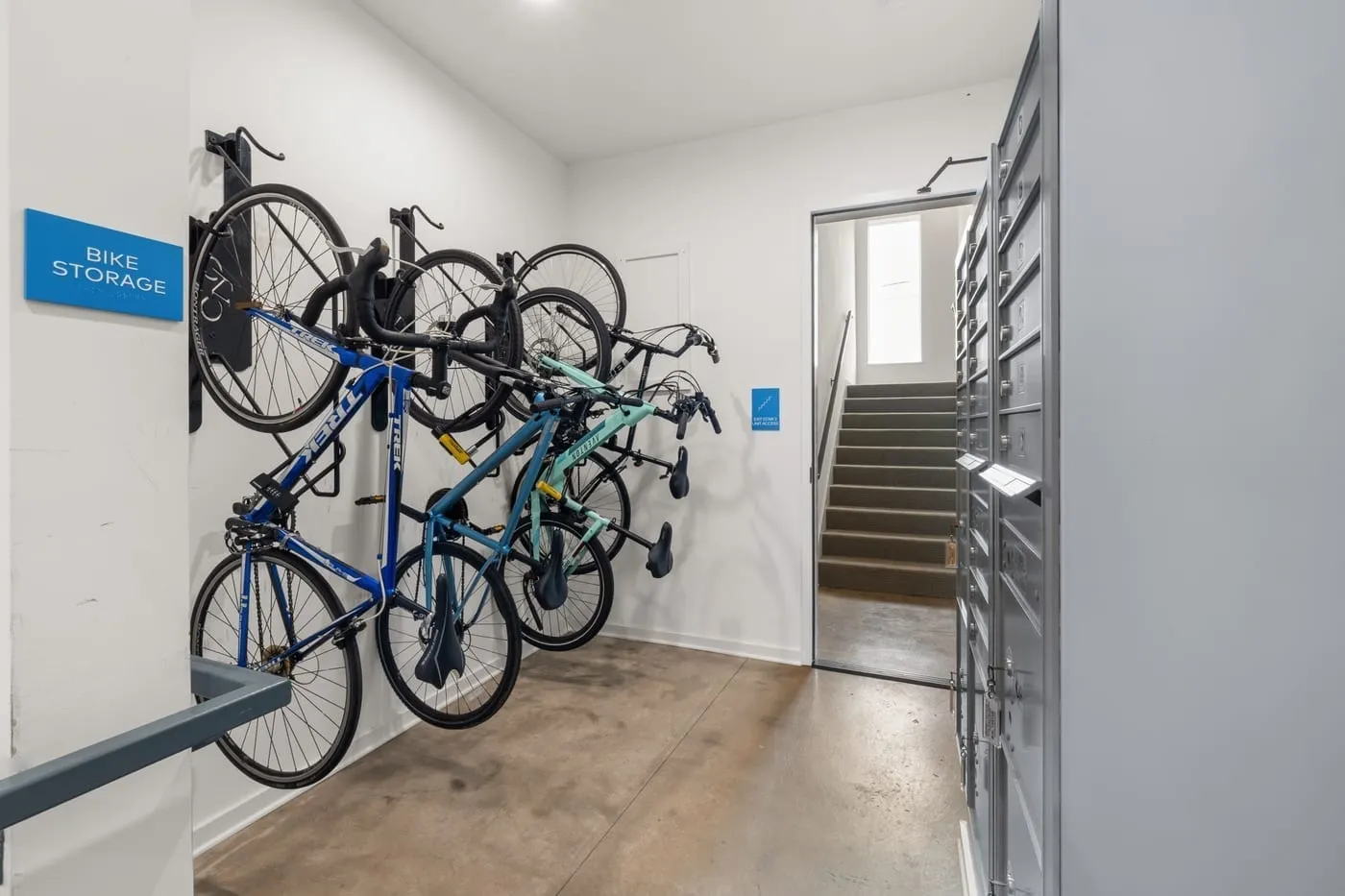
Many purpose-built rental buildings in Canada, especially newer mid-rise and high-rise developments, include a shared bike room in the parkade or basement, accessed by fob or key, at no extra cost. It’s the single best option because the bike leaves your unit entirely and costs nothing.
Ask property management directly rather than assuming there isn’t one. Some buildings don’t advertise the bike room well, or it’s technically available but under-used because nobody asked. If a bike room doesn’t exist, some property managers are open to installing a shared rack if enough tenants request it.
Questions worth asking property management:
- Is there a bike room, and how do I get access?
- Is there a waitlist or extra fee for a bike locker?
- Would management consider adding wall hooks to a shared hallway if several tenants have bikes?
Which Storage Method Should You Actually Pick?
| Storage method | Typical cost (CAD) | Damage risk | Best for |
|---|---|---|---|
| Building bike room | $0 | None | Anyone whose building has one |
| Command-rated adhesive hook | $12–$30 | None (if removed properly) | Light bikes, strict no-drill leases |
| Tension-mount floor-to-ceiling rack | $40–$90 | None | Heavier bikes, no wall access needed |
| Stud-mounted steel wall hook | $15–$25 | Minimal (one small hole) | Heavier bikes, leases allowing small holes |
| Vertical floor stand | $30–$60 | None | Renters who move often, corners |
| Balcony wall hook + cover | $30–$55 total | Minimal to none | Studios/1-beds with no interior space to spare |
This table is roughly the order I’d try things in, cheapest and lowest-risk first, moving down only if the option above it doesn’t fit the apartment or the lease.
Final Thoughts
A bike doesn’t have to dominate a small apartment. Ask about the bike room first, since it’s free and gets the bike fully out of your space. If there’s no bike room, a Command-rated hook or tension-mount rack solves it without a single mark on a wall that isn’t yours.
Whichever method you land on, pair it with a plan for the rest of your entryway or balcony so the bike isn’t the only thing you’ve organized. → For the wall space right below that hook, see small entryway & hallway storage ideas for shoe racks, consoles, and hooks that work with the same rental restrictions, and small apartment bathroom storage ideas for the same no-drill rules applied indoors.