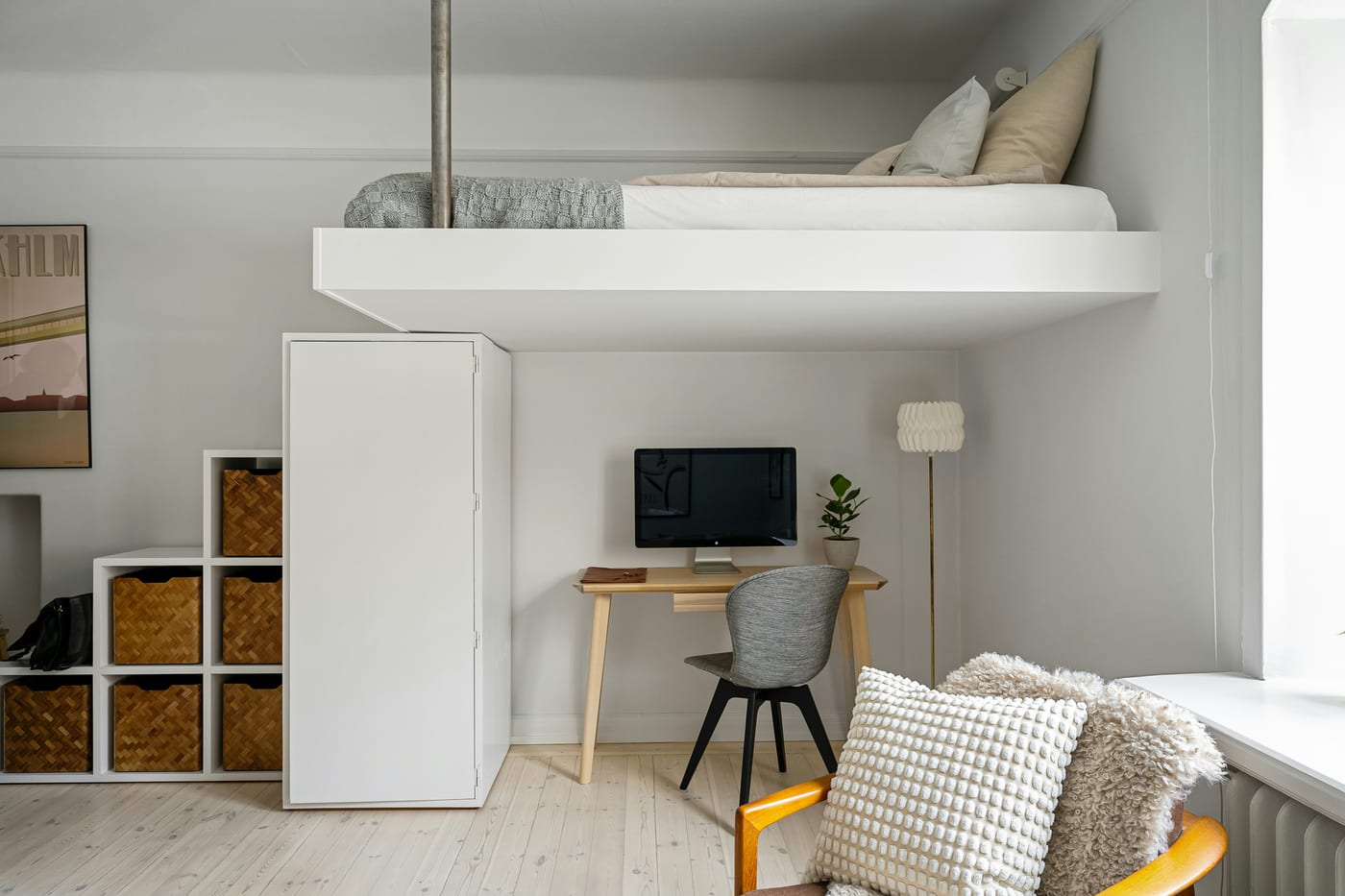
Making a small room look bigger is mostly visual psychology. The eye is easily tricked by light, colour, lines, and scale — and once you understand the tricks, you can apply them to any room in your apartment. None of these require a renovation. Most don’t even require a significant purchase. According to CMHC, the average Canadian apartment renter lives in units under 700 sq ft — so these tricks apply to most of us. Here are the 13 that have made the biggest difference in my 510 sq ft Toronto apartment, grouped by what they actually work on: colour, floor space, height, and editing.
If you want to know where the biggest wins are before reading further:
| Trick | Cost | Effect |
|---|---|---|
| Declutter every surface | Free | Immediate — the single biggest change |
| Large mirror opposite a window | from ~$89 CAD | Doubles light, adds visual depth |
| Furniture with visible legs | Varies | Unbroken floor line reads as more room |
| Ceiling-height curtains | under $90 CAD | Adds perceived ceiling height |
Colour and Light
The eye judges the size of a room mostly by how light moves through it. These three tricks are where every small room should start.
Use Light Colours as the Primary Palette
The most fundamental trick in small-space decorating: light colours make walls feel farther away. Dark colours make them feel closer.
Soft white, warm cream, light greige — these shades reflect natural light and visually expand a space. Use them on the dominant surfaces (walls, large furniture, bedding) and save your accent colour for cushions and small decor objects.
In a rental where you can’t paint: if your walls are white or off-white, you’re already in good shape. Complement with light-coloured bedding and a light rug.
Keep the Palette Cohesive
A room with a unified colour palette reads as one intentional space. A room where colours clash or where every piece is a different shade reads as chaotic — and feels smaller.
Pick three colours and stick to them throughout the room:
- A neutral base (dominant colour, probably your walls)
- A main colour (shows up in textiles and furniture)
- An accent colour (cushions, art, and one or two objects)
Add a Large Mirror Opposite a Light Source
A mirror that faces a window reflects the outdoor light back into the room, effectively doubling the brightness. It also creates the visual impression of a second room beyond the reflection — depth where there is none.
Best placement:
- Leaning against the wall opposite a window
- On the wall beside a window
- At the end of a narrow hallway
A leaning full-length mirror requires no installation. IKEA HOVET ~$279 CAD, or Amazon.ca options from ~$89 CAD.
Hang Curtains at Ceiling Height
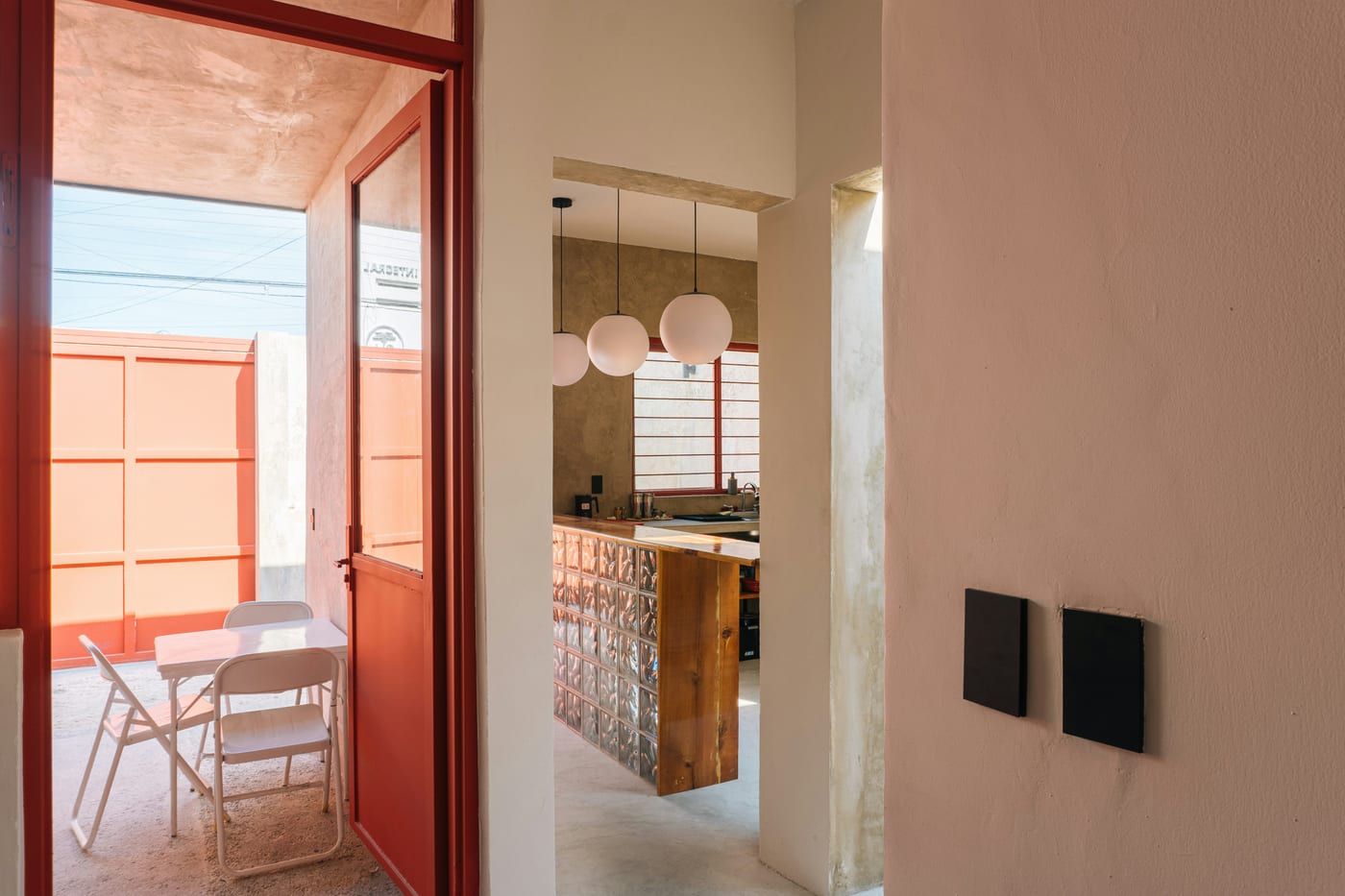
Curtain rods mounted close to the ceiling — not at window height — make ceilings look dramatically higher. The vertical lines of curtains that fall from near the ceiling to the floor give the room a sense of height it doesn’t technically have.
This is one of the most effective tricks for making a small apartment feel larger, and it costs almost nothing to implement with a tension rod.
Furniture and the Floor Line
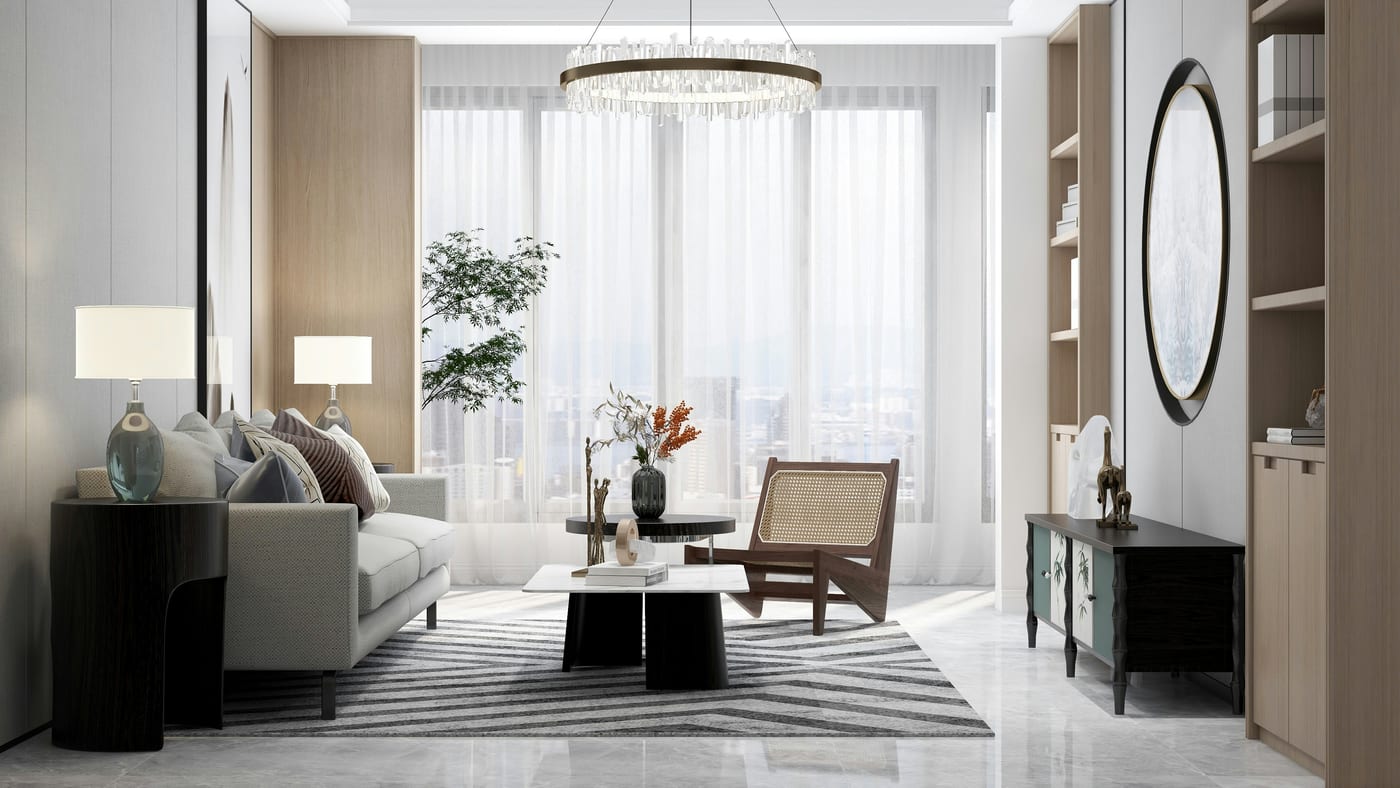
Visible floor is the strongest “this room is big” signal there is. Everything in this section protects it.
Choose Furniture With Legs
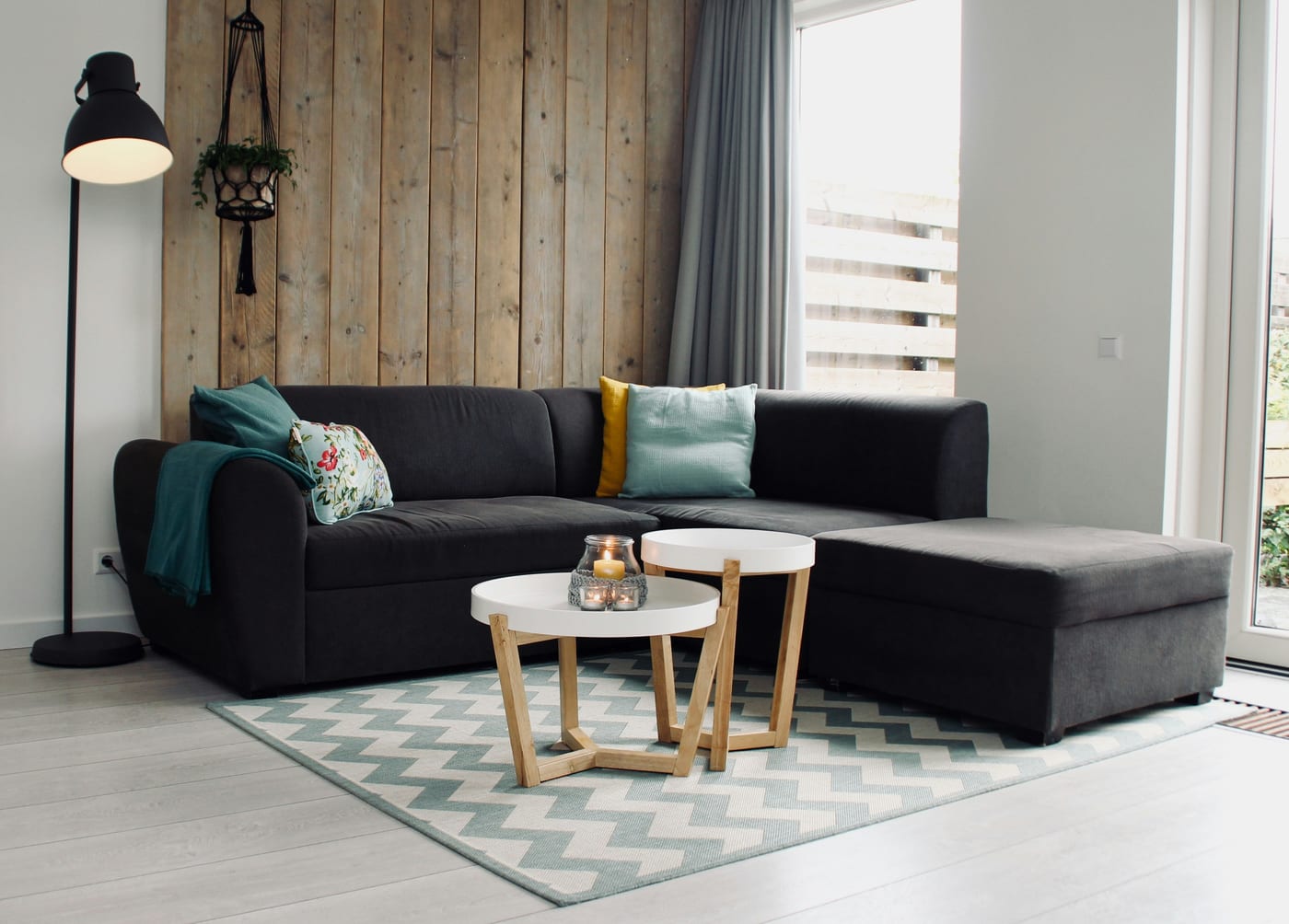
Furniture that sits on visible legs keeps the floor line unbroken — the eye reads this as more floor space and more room. Furniture that sits flat on the floor (platform beds, low sectionals, solid storage cubes) interrupts the floor plane and makes the room feel more compressed.
Look for:
- Beds with a visible frame and legs (the IKEA NORDLI is a good example)
- Sofas with legs, not to-the-floor fabric
- Coffee tables and side tables on legs rather than solid bases
Declutter Every Surface
Nothing makes a room feel smaller faster than clutter. Every item sitting on a surface adds visual noise that the eye has to process. In a small room, this visual complexity reads as spatial compression.
The rule: only things that are beautiful or used daily are visible. Everything else has a home in a drawer, cabinet, or basket.
This is completely free and often the single most impactful change.
Keep the Floor as Clear as Possible
Visible floor space reads as room. The more floor you can see, the larger the room appears to be.
This means:
- No furniture stored on the floor (move it off the floor or into a closet)
- Rugs that are the right size (a rug that covers the floor correctly doesn’t interrupt the floor — a too-small rug creates a strange floating island effect)
- Furniture with legs (see above)
Height and Proportion
Once the floor is handled, the next dimension to work on is vertical.
Use Vertical Lines to Add Visual Height
The eye follows lines. Vertical lines draw the eye upward, creating the impression of more ceiling height.
How to add vertical lines:
- Tall, narrow bookshelves (IKEA BILLY narrow)
- Floor-to-ceiling curtains
- Vertical stripes in wallpaper or art
- Tall plants in a corner
Layer Your Lighting
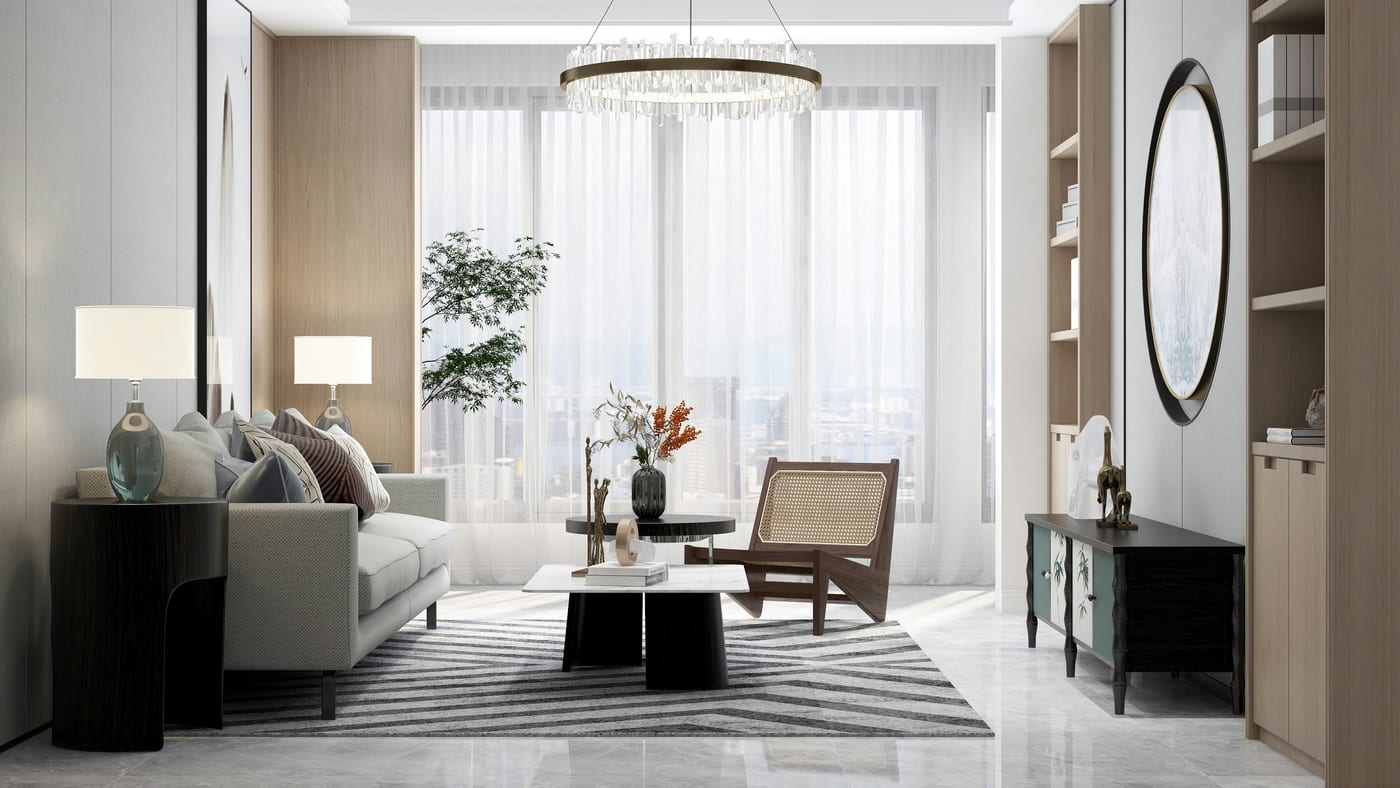
Rooms lit only by a single overhead fixture look flat. Layered lighting — a floor lamp, a table lamp, and warm overhead — creates visual depth and makes the room feel like it has more dimension.
Warm bulbs (2700K) throughout. Avoid cool or daylight bulbs in living spaces.
Cost: warm bulb swap ~$15 CAD. Floor lamp from ~$45 CAD.
Size Your Rug Correctly
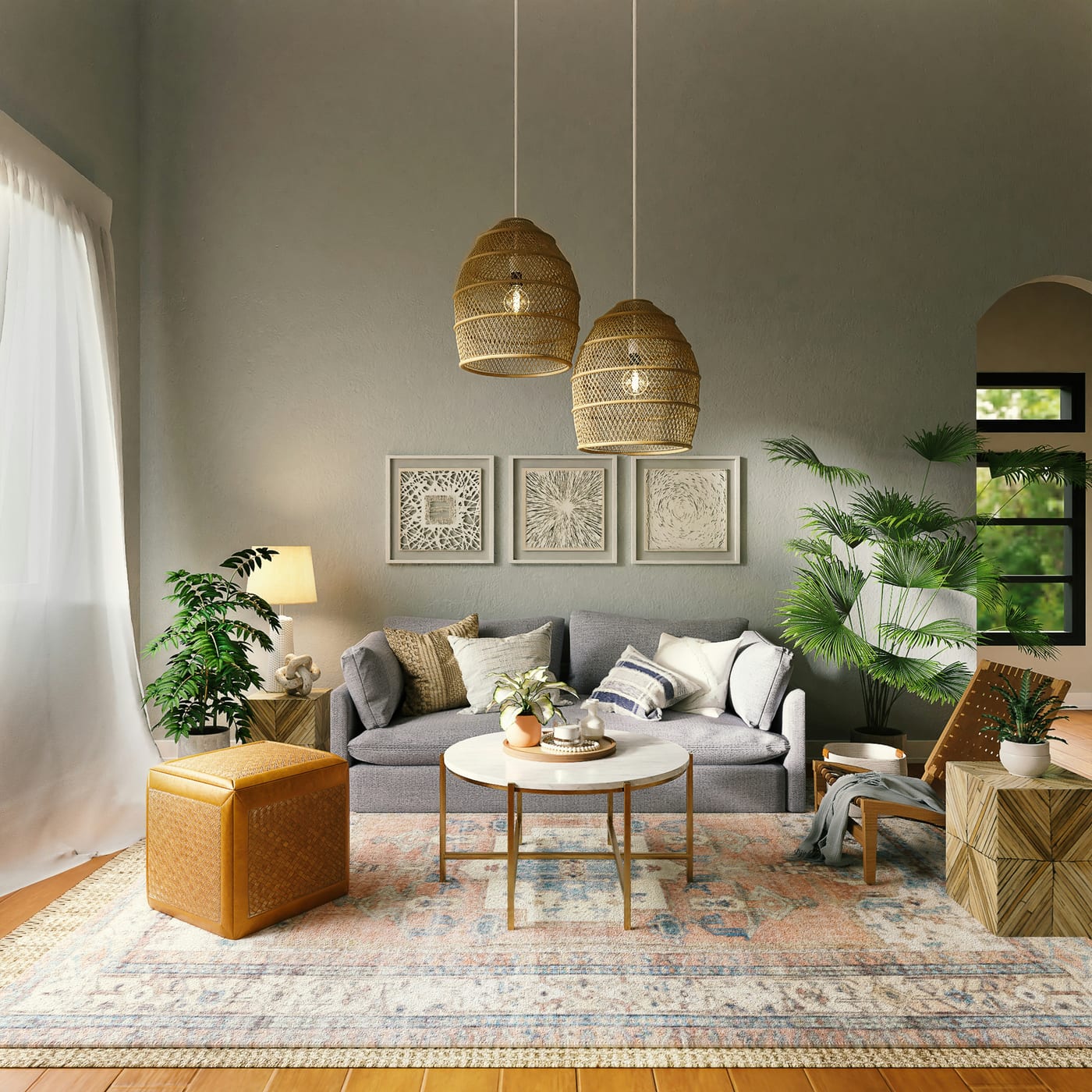
A rug that is too small for the room creates a floating island effect that actually makes the room look smaller. A correctly sized rug — front legs of all furniture on the rug — creates a unified ground plane that makes the room look larger.
Minimum size for a small living room: 160 × 230 cm.
Edit Ruthlessly
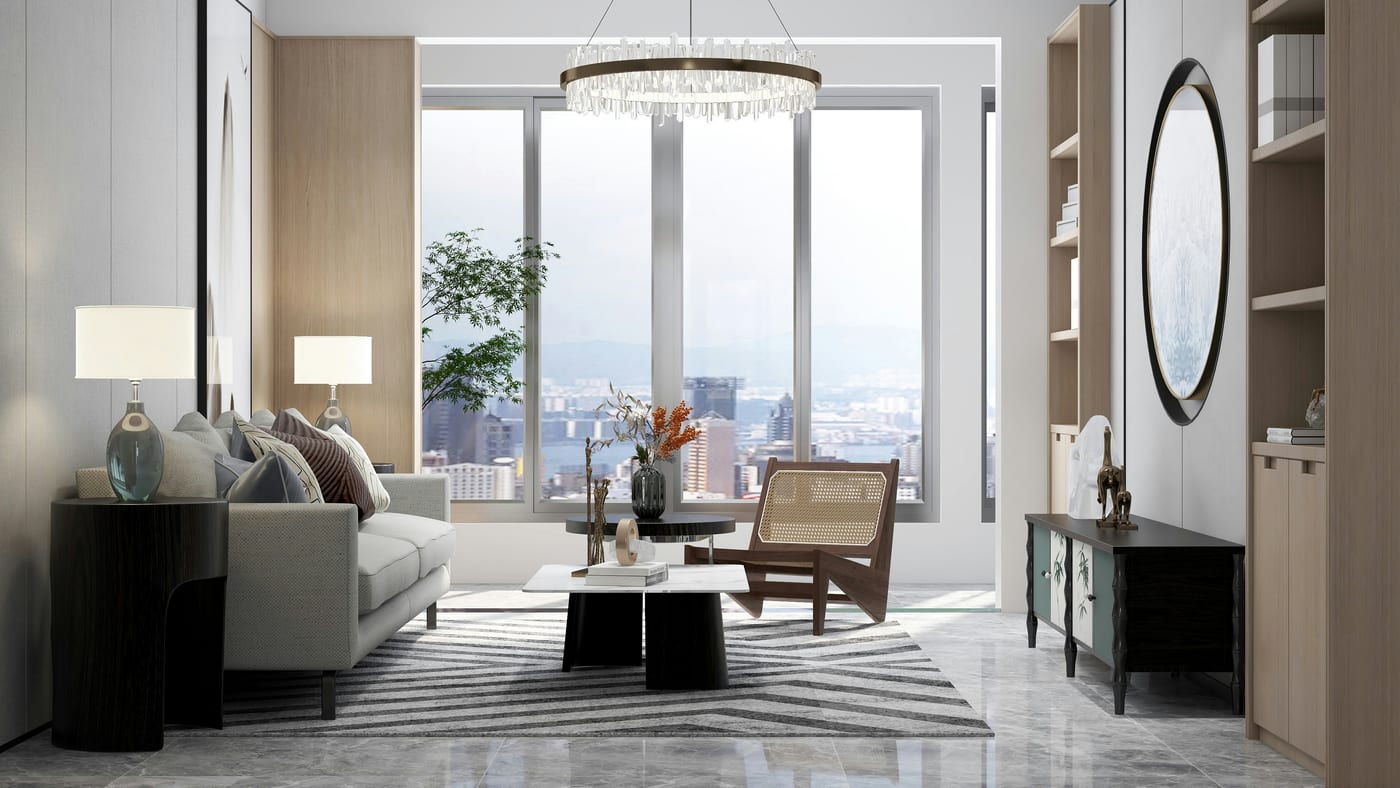
The final group is about restraint — the discipline that makes all the other tricks land.
Reduce the Number of Items in the Room
This is the anti-accumulation principle. Every item in a small room takes visual space. The fewer items, the more spacious the room feels.
This doesn’t mean bare minimalism. It means editing deliberately: keep what serves a purpose or brings genuine pleasure, remove the rest.
Use Glass or Lucite for Secondary Furniture
Glass and clear acrylic (Lucite) furniture are visually transparent — the eye reads through them rather than stopping at them. A glass coffee table or acrylic chair takes physical space but not visual space.
Budget option: IKEA VITTSJÖ glass and metal shelving unit, ~$70–$130 CAD.
Keep One Feature — Not Many
A room with a single strong feature (a gallery wall, a statement piece of art, a beautifully styled bookcase) reads as designed. A room with many competing features reads as busy and cramped.
Pick the strongest single focal point in each room. Support it — don’t compete with it.
The Quick-Win Checklist
Things you can do today for free or nearly free:
- Declutter every surface in the room
- Rearrange furniture to float the main piece slightly from the wall
- Swap overhead bulb for 2700K warm white
- Lean the largest mirror you own against the wall opposite the window
- Remove anything from the floor that doesn’t need to be there
Five changes. No purchases. The room looks larger by tonight.
These 13 tricks work in any room — living room, bedroom, or studio. Apply the free changes first, then invest in the ones that will make the most difference for your specific space. In most Canadian apartments, the mirror and lighting changes deliver the highest impact per dollar.
→ To apply these tricks specifically to your living room, see small space living room ideas. For a minimalist approach that combines most of these principles into one design philosophy, minimalist small apartment ideas is the natural next read.