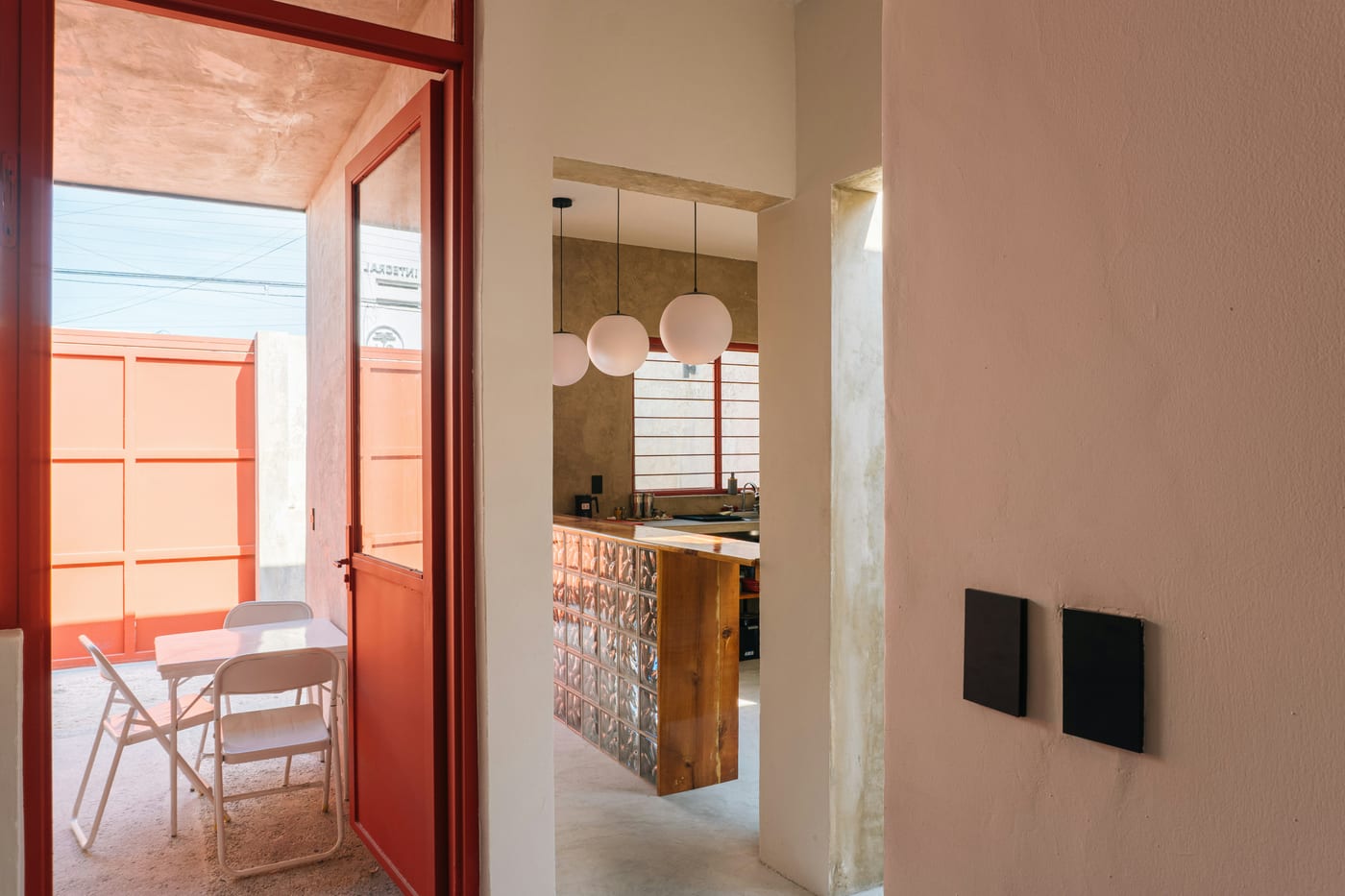
Most small space decorating advice is a product list. That’s useful, but it skips the more important question: why does small space decorating work differently? Once you understand why light colours expand a space and why furniture with legs makes a room feel larger, you can apply those principles to every decision. Here are the 14 principles I’ve learned from three years in a 510 sq ft Toronto apartment. According to CMHC, rental apartments make up a significant share of Canada’s housing stock — and most renters can’t alter their walls, which makes knowing these principles even more valuable.
TL;DR: Light colours, mirrors, and furniture with visible legs are the three principles that deliver the most visual space. Area rugs must be correctly sized — a too-small rug makes a room feel smaller, not larger. One cohesive 3-colour palette throughout makes the whole apartment read as one unified space. Clear surfaces are non-negotiable: clutter visually compresses every room.
Rule 1: Light Colours Expand, Dark Colours Contract
This is the most fundamental principle in small space decorating. Light, warm neutrals — soft white, cream, warm greige — reflect light and make walls appear farther away. Dark colours absorb light and make walls feel closer.
For renters who can’t paint: work with what you have. If your walls are white, keep them. Complement with light bedding and soft furnishings. The wall colour is often your biggest asset.
Use dark colours as accents only — a navy cushion, a black picture frame, a dark green plant pot.
Rule 2: Scale Furniture to the Room
A sofa that’s 240 cm long in a 300 cm wide living room is going to dominate the space completely. Always measure before buying.
The proportional guide:
- Sofa: no longer than 70% of the wall it faces
- Coffee table: about 2/3 the length of the sofa
- Bed: 60 cm clearance on at least one side, 90 cm walkway in front
When in doubt, buy the smaller size. A slightly small piece of furniture makes a room feel open. A slightly large one makes it feel cramped.
Rule 3: Furniture With Legs Creates Visual Breathing Room
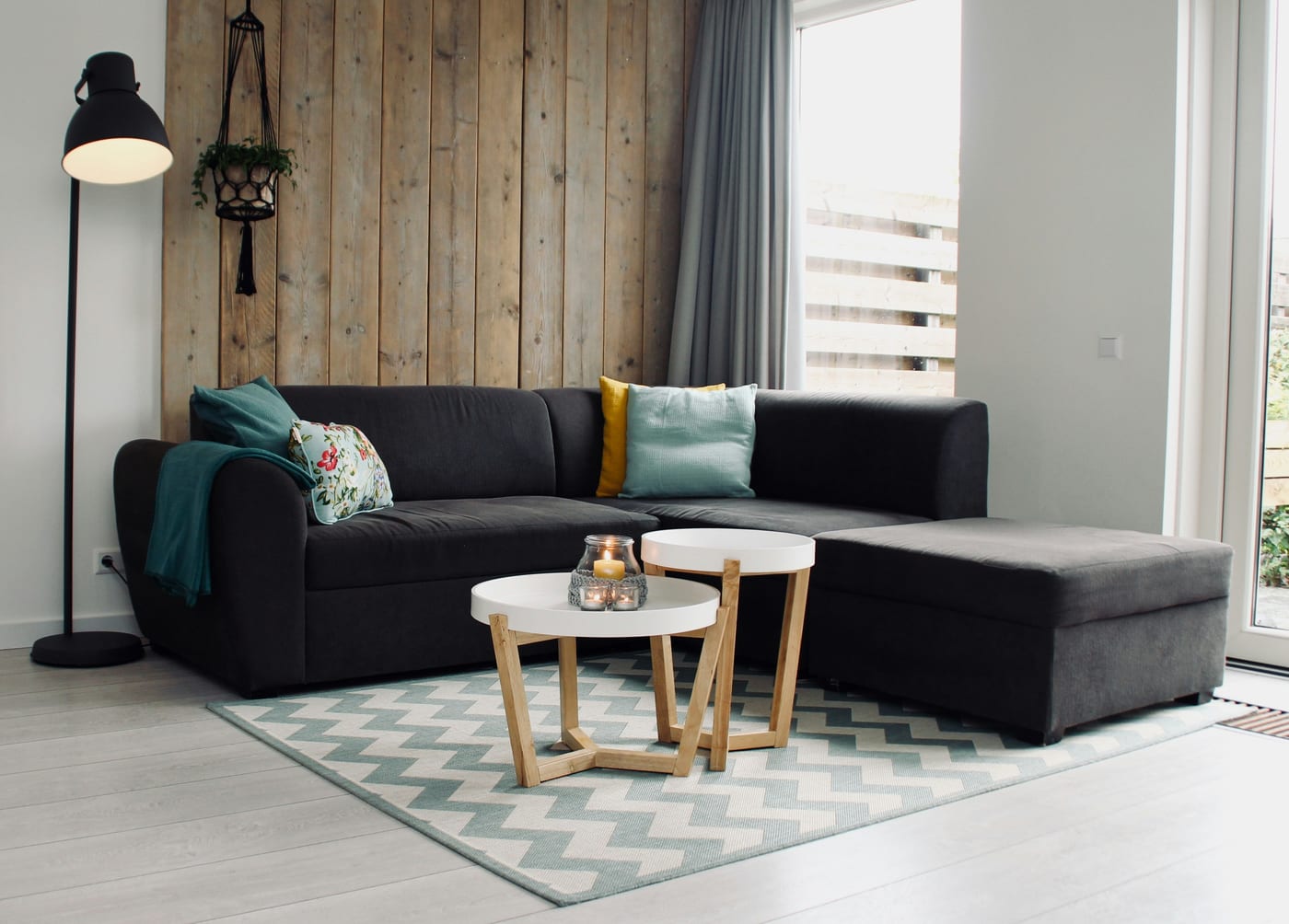
Low, solid furniture that sits on the floor (platform beds, storage cubes, blocky sofas) creates a visual heaviness in a small room. Furniture with legs lets the floor continue underneath — the eye reads this as more space.
Look for:
- Beds with a visible frame and legs
- Sofas and armchairs with legs (not fabric-to-floor styles)
- Side tables and coffee tables with legs rather than solid bases
Rule 4: Go Vertical Everywhere
The space above eye level in most Canadian apartments is completely unused. This is where storage, shelving, and tall furniture go in a small space.
- Float shelves up high on the wall for books and plants
- Use tall, narrow wardrobes (IKEA PAX) rather than wide, low ones
- Hang art in tall vertical configurations rather than wide horizontal ones
- Curtain rods as close to the ceiling as possible, curtains to the floor
Rule 5: One Strong Focal Point Per Room
A small room with competing focal points — a busy gallery wall, a patterned sofa, a colourful rug, and a colourful accent wall all in the same room — feels chaotic and smaller than it is.
Choose one focal point per room and make it strong. Everything else plays a supporting role.
In a living room, the focal point is usually the sofa and the wall behind it. In a bedroom, it’s the bed wall. Design to that point and keep the rest restrained.
Rule 6: Mirrors in Strategic Positions
Mirrors create the illusion of depth and reflect light, making any room feel larger and brighter. The key is placement.
Best mirror placements:
- Opposite or beside a window — reflects natural light back into the room
- On the wall you see when you enter a room — creates the impression of more space
- Full-length in the bedroom — simultaneously functional and space-expanding
No drilling required: lean a large mirror against the wall (IKEA HOVET, ~$279 CAD) or use Command strips for lighter options.
Rule 7: Layer Your Lighting
Single overhead lights make every room feel flat. Layered lighting — ambient, task, and accent — creates depth and warmth that makes a small apartment feel like a home.
The three-layer approach:
- Ambient — a warm overhead light, floor lamp, or table lamp that fills the whole room
- Task — a desk lamp, reading lamp, or under-cabinet kitchen light for specific activities
- Accent — LED strip lights behind the TV, lights inside a bookcase, a candle
Warm bulbs (2700K) throughout. Avoid cool white or daylight bulbs in residential spaces.
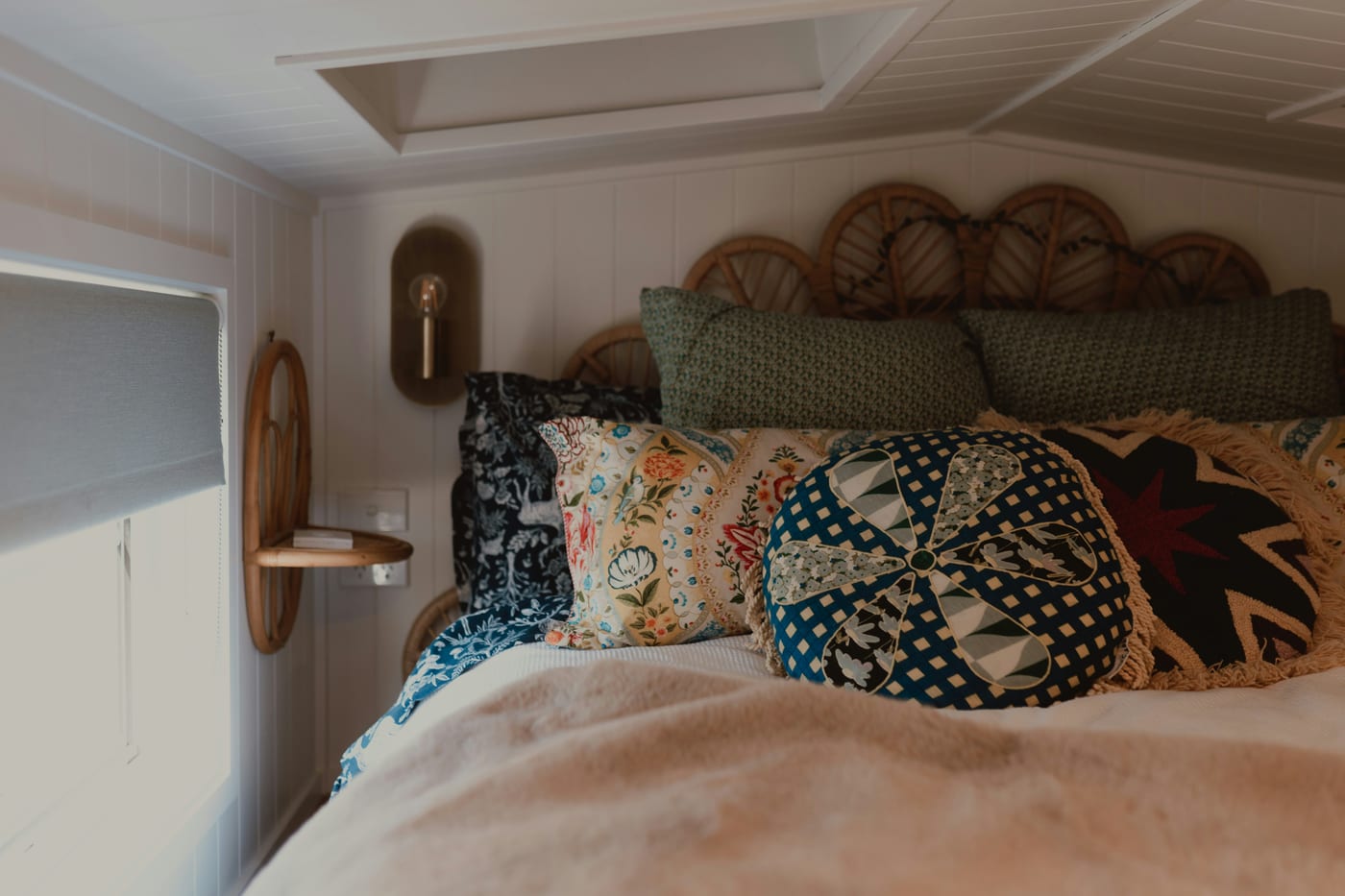
Rule 8: Textiles Are the Cheapest Design Element
In a rental apartment where you can’t change the walls, floors, or architecture, textiles do the most work.
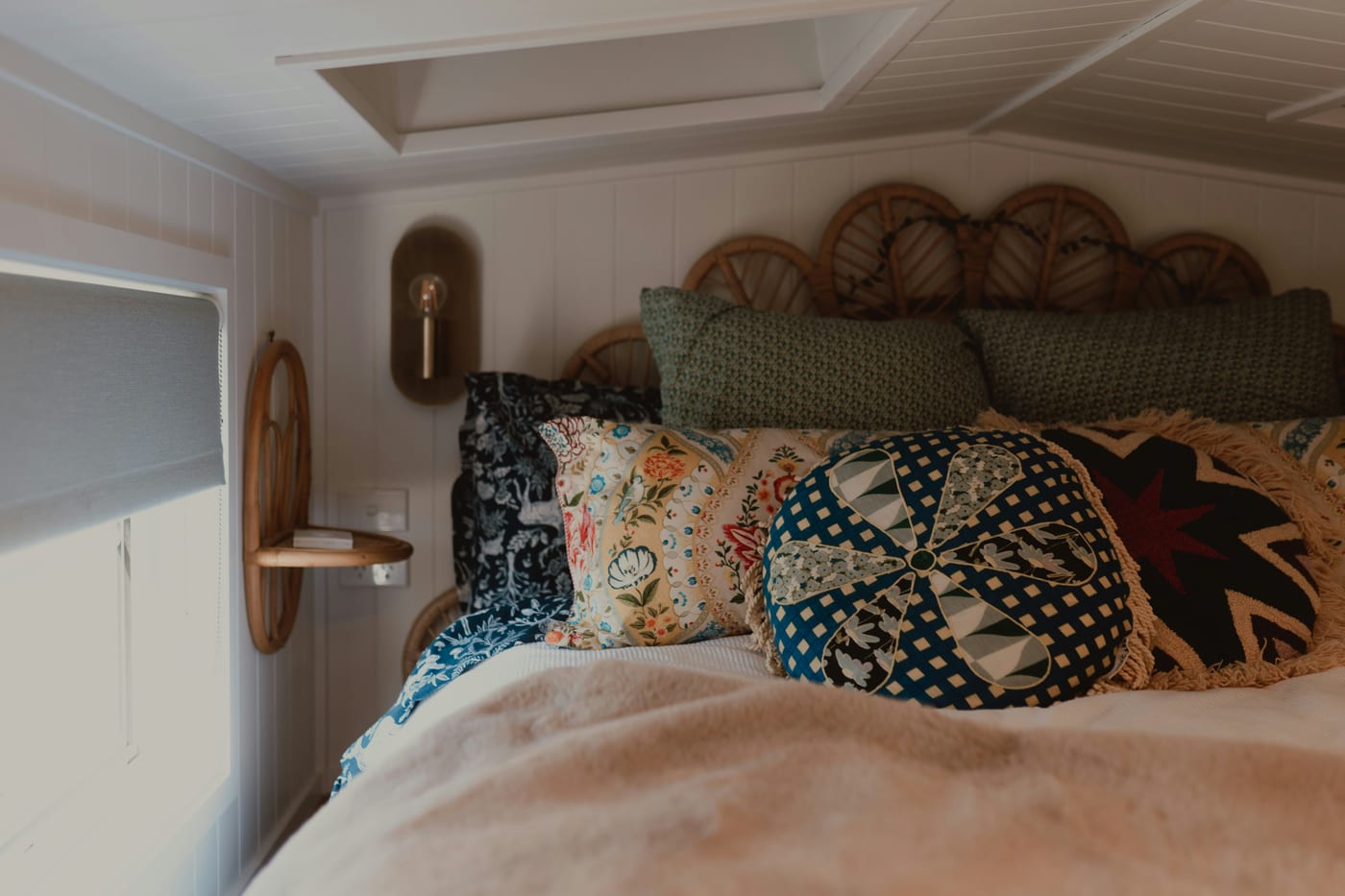
A rug, throw cushions, and a blanket transform the look and feel of a living room for under $200 CAD. You’ll find solid options at Wayfair Canada and HomeSense — both carry a wide range of affordable textiles that travel well from apartment to apartment. Matching towels and a bath mat do the same for the bathroom for under $60 CAD.
Textiles also pack when you move. Every cent spent on quality textiles follows you to the next apartment.
Rule 9: Clear Surfaces Are Non-Negotiable
Visual clutter is the enemy of small space decorating. Every item left out on a surface adds visual noise that makes the room feel smaller and more chaotic.
The goal: only things that are beautiful or used daily are visible. Everything else has a drawer, a cabinet, a basket, or a bin.
Start with one surface — clear it completely, then style it intentionally with 1–3 objects. That’s how a styled surface looks different from a cluttered one.
Rule 10: Use One Cohesive Colour Palette Throughout
A small apartment that feels cohesive feels larger than one with a different colour story in every room. Pick 3 colours and carry them throughout:
- A neutral base (walls, larger furniture)
- A main colour (textiles, cushions, decor)
- An accent colour (one or two objects per room)
When every room shares the same palette, the whole apartment reads as one unified space — which makes it feel bigger.
Rule 11: Area Rugs Define and Separate
In a studio apartment, rugs create zones where there are no walls. In a regular apartment, they anchor furniture groupings and give each room a sense of defined space.
Sizing is critical: a too-small rug makes a room feel smaller, not larger. The front legs of the sofa should be on the rug in the living room. The rug in the bedroom should extend 50–60 cm on either side of the bed.
Rule 12: Plants Everywhere (But Not Cluttering)
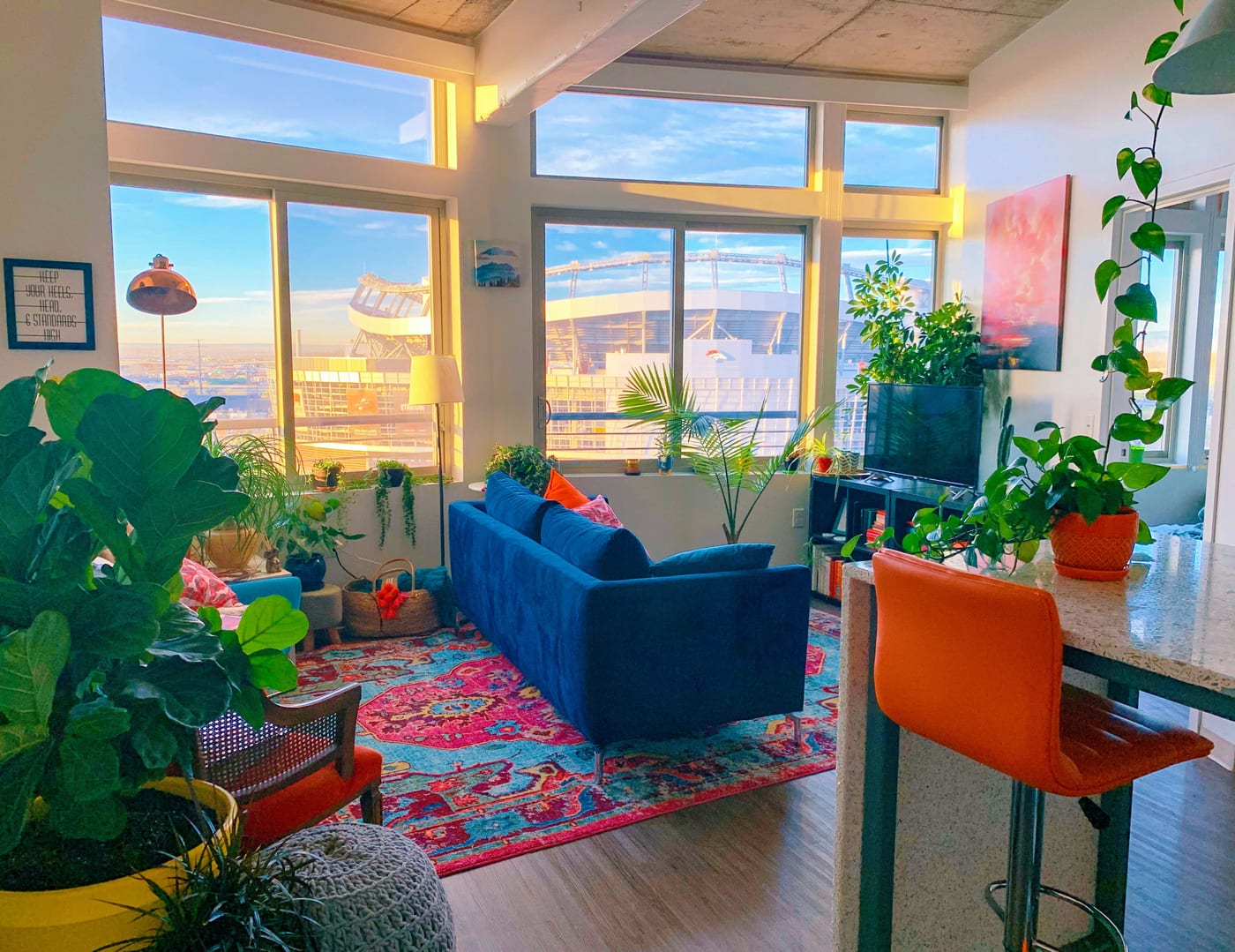
Plants add life, softness, and organic texture that no designed object can replicate. In a small apartment, they punch above their weight because they draw attention and add colour without taking floor space (especially when placed on shelves or hanging).
One rule: only buy plants you can keep alive. A healthy pothos is infinitely better than a sad dried-out succulent.
Rule 13: Fewer, Better Pieces Beat More Mediocre Ones
A small apartment filled with 20 mediocre furniture and decor pieces looks worse than one with 8 carefully chosen pieces with room to breathe.
Buy less, choose carefully, and leave space. The empty space is not waste — it is part of the design.
Rule 14: Edit Regularly
Small spaces require ongoing curation. Things accumulate. New items come in, old ones don’t leave. The one-in-one-out rule is the simplest maintenance habit: every time something new arrives, something old leaves.
Review the apartment once every season. Walk through each room with fresh eyes — what hasn’t been used? What is causing visual clutter? What has outlived its purpose?
A small apartment in good order feels significantly larger than the same space cluttered.
The Small Space Decorating Checklist
Before any purchase or decor decision, ask:
- Does it fit the scale of the room?
- Does it add to or detract from the colour palette?
- Does it serve a function or bring genuine beauty?
- Does it leave enough open space around it?
- Will you still want it in two years?
If yes to all five, it belongs in your apartment.
These 14 rules apply to every room in a Canadian rental — use them as a filter for every decor decision and the apartment stays coherent. For specific room-by-room ideas on how to apply these principles, apartment decor ideas covers the living room, bedroom, and entryway with exact Canadian product picks. And for renter-safe versions of every idea here, renter-friendly apartment decor ideas focuses on no-damage solutions throughout.
→ For the living room specifically, small space living room ideas applies these principles to layout, lighting, and furniture scale in a step-by-step format.