Your living room is the first room guests see and the room you spend the most time in — it’s also where the “vibey apartment living room aesthetic” people are chasing lately actually gets built, not through one statement piece but through the layered small decisions below. When it’s 180 square feet and doubles as your dining room and home office, every decision matters.
I’ve lived in a 510 sq ft Toronto apartment for three years. The living room is roughly 180 sq ft. Here’s what I’ve learned — and what I’d do differently if I were starting from scratch today. If you want the step-by-step sequence instead of a straight list, our guide on how to decorate a small living room walks through the same ideas in the order to tackle them.
TL;DR: The biggest wins in a small living room are a properly sized sofa, one large rug instead of multiple small ones, vertical storage, and mirrors to double the visual space. Do those four things before anything else.
1. What Sofa Actually Fits a Small Living Room?
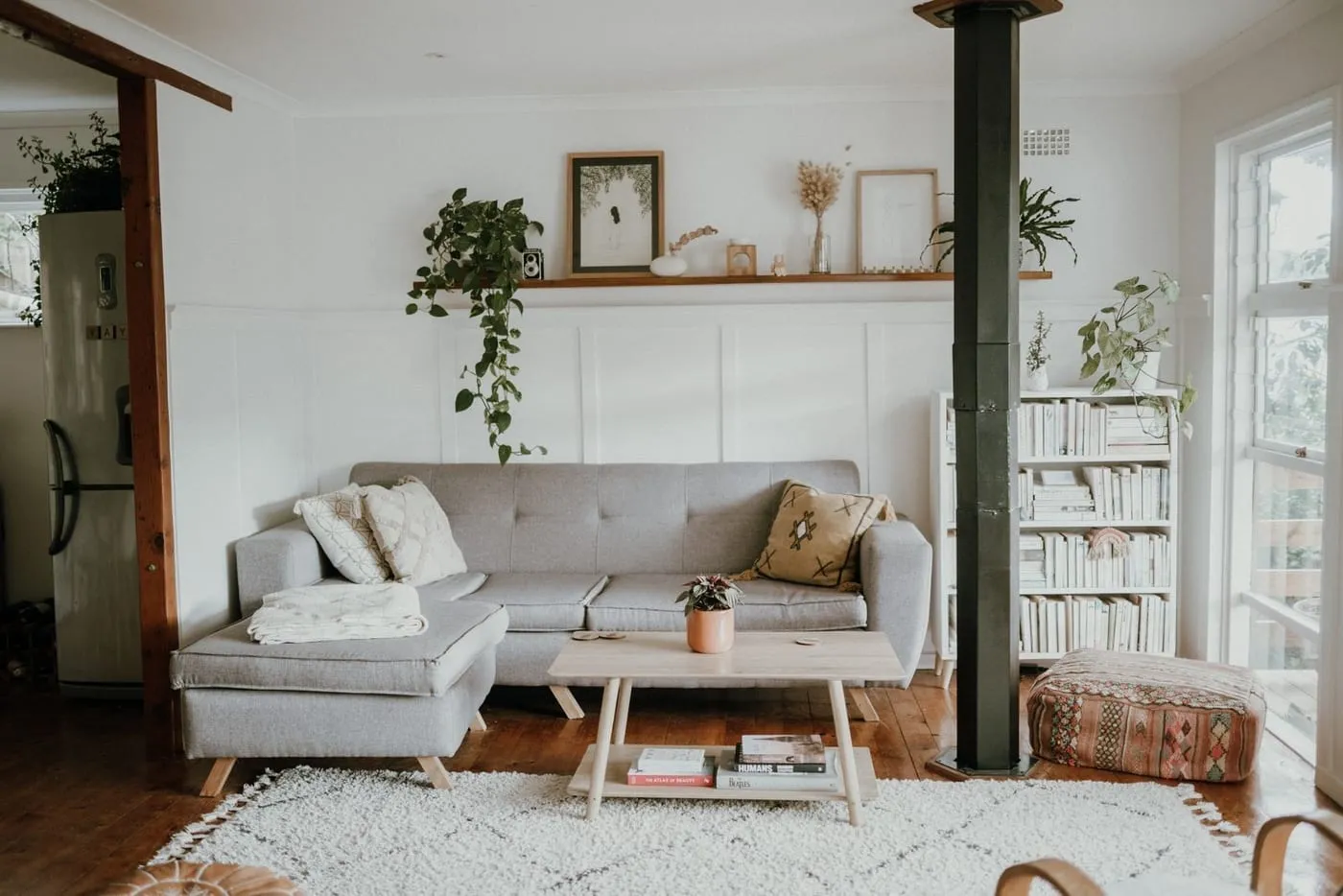
The sofa is the most common mistake in small living rooms. People buy for comfort first and size second — then the sofa takes over the entire space. For a room under 250 sq ft, stick to a two-seater or slim three-seater no longer than 200 cm, and avoid sectionals entirely unless you have a dedicated corner layout with no other furniture — that same spare corner is often better used as a reading nook than filled with a chair nobody sits in.
Pro tip: Measure your doorway before ordering. Many Canadian apartment buildings have narrow hallways and tight elevator dimensions. A sofa that won’t fit through the door is a $700 mistake.
For specific sofa picks, prices, and what to avoid, see our full small space furniture guide.
2. Why One Large Rug Beats Three Small Ones?
A single large rug (at minimum 200×290 cm) makes a small room feel like a deliberate, unified space — and does more for it than three smaller rugs combined, which read as a furniture showroom.
The rug should sit under the front legs of your sofa and chairs at minimum — ideally under all legs. This pulls the seating group together visually and tricks the eye into reading the space as larger.
Cost: IKEA STOENSE or STOCKHOLM rugs start at ~$129–$199 CAD for a 200×300 cm size.
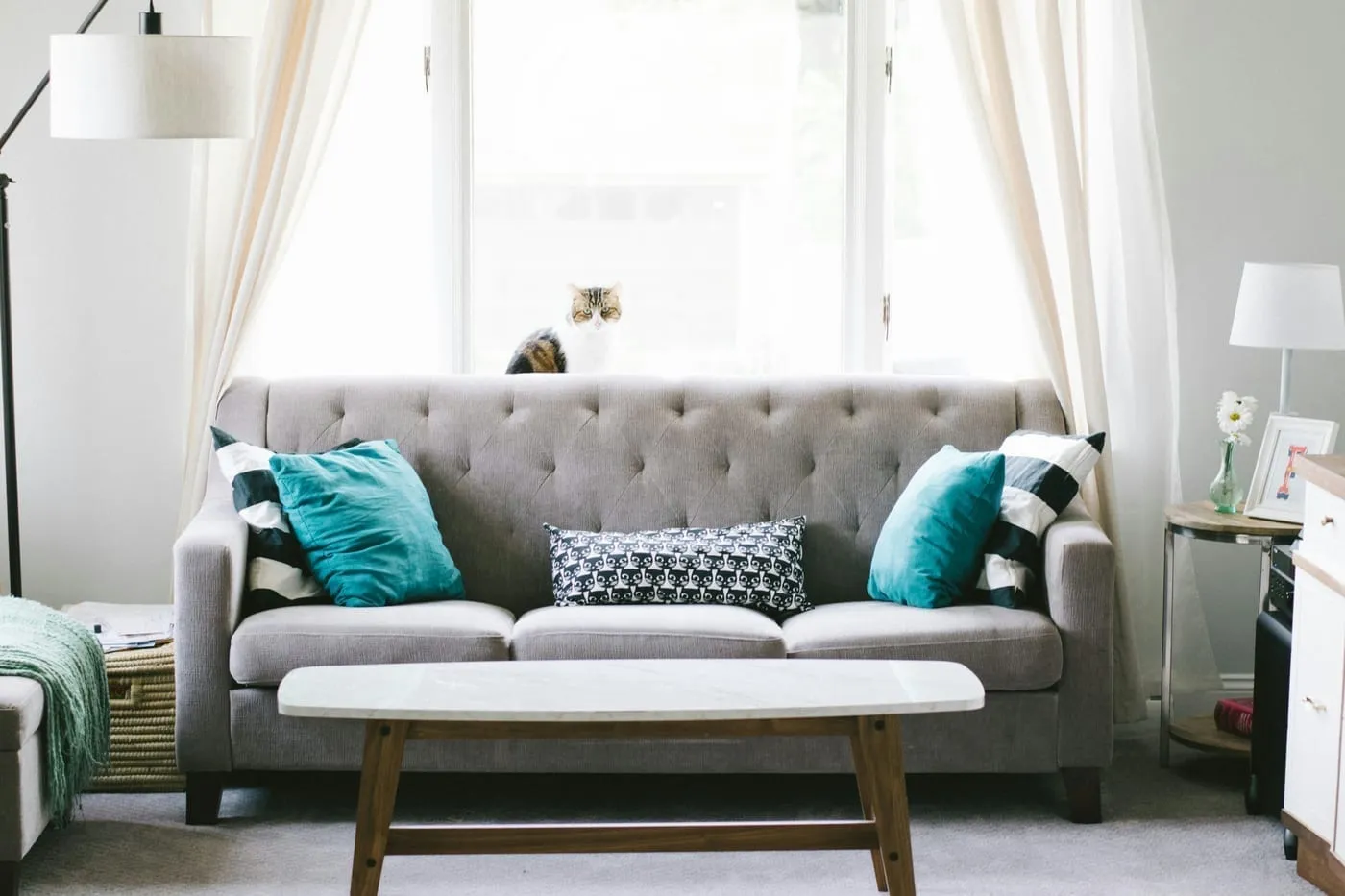
3. Should You Mount the TV on the Wall?
A TV stand or entertainment unit consumes 60–90 cm of floor depth — floor space you don’t have. A wall-mounted TV with a slim floating shelf below for the console reclaims that entire footprint.
Use a fixed or tilt wall mount (no full-motion arm needed in a small room). For renters: TV mounts require a wall anchor, but most Canadian landlords allow this since it leaves a very small hole that’s easily patched on move-out.
Cost: Amazon.ca TV wall mount, ~$25–$45 CAD.
4. Why Go Vertical for All Storage?
In a small living room, your walls are more valuable real estate than your floor. Wall shelves, floating media units, and tall bookshelves pull the eye upward and leave the floor clear — which is what makes a room feel spacious.
A floor-to-ceiling KALLAX or BILLY bookcase along one wall gives you massive storage without narrowing the walkable area. According to CMHC, the average Canadian renter moves every 3–4 years — so every furniture decision should be both functional and easy to reassemble.
→ We go deep on this in our guide to small apartment organization ideas on a budget — covers every room including the living area.
5. How Do You Use Mirrors Strategically?
A large mirror on the wall opposite your main window reflects natural light back into the room and visually doubles the depth of the space — the oldest trick in small-space design, and it still works. For a 180 sq ft living room, a mirror should be at least 90 cm wide; the IKEA NISSEDAL (~$99 CAD) meets that minimum.
Lean it against the wall for a renter-friendly installation, or use picture-hanging strips for lighter options.
Cost: IKEA NISSEDAL mirror (~$99 CAD), or HomeSense for better value on larger sizes.
6. Choose Furniture with Legs
Sofas, chairs, and sideboards that sit directly on the floor visually cut the room in half. Look for pieces with legs at least 15 cm off the floor — that gap lets light pass underneath and keeps the floor reading as one continuous, larger surface.
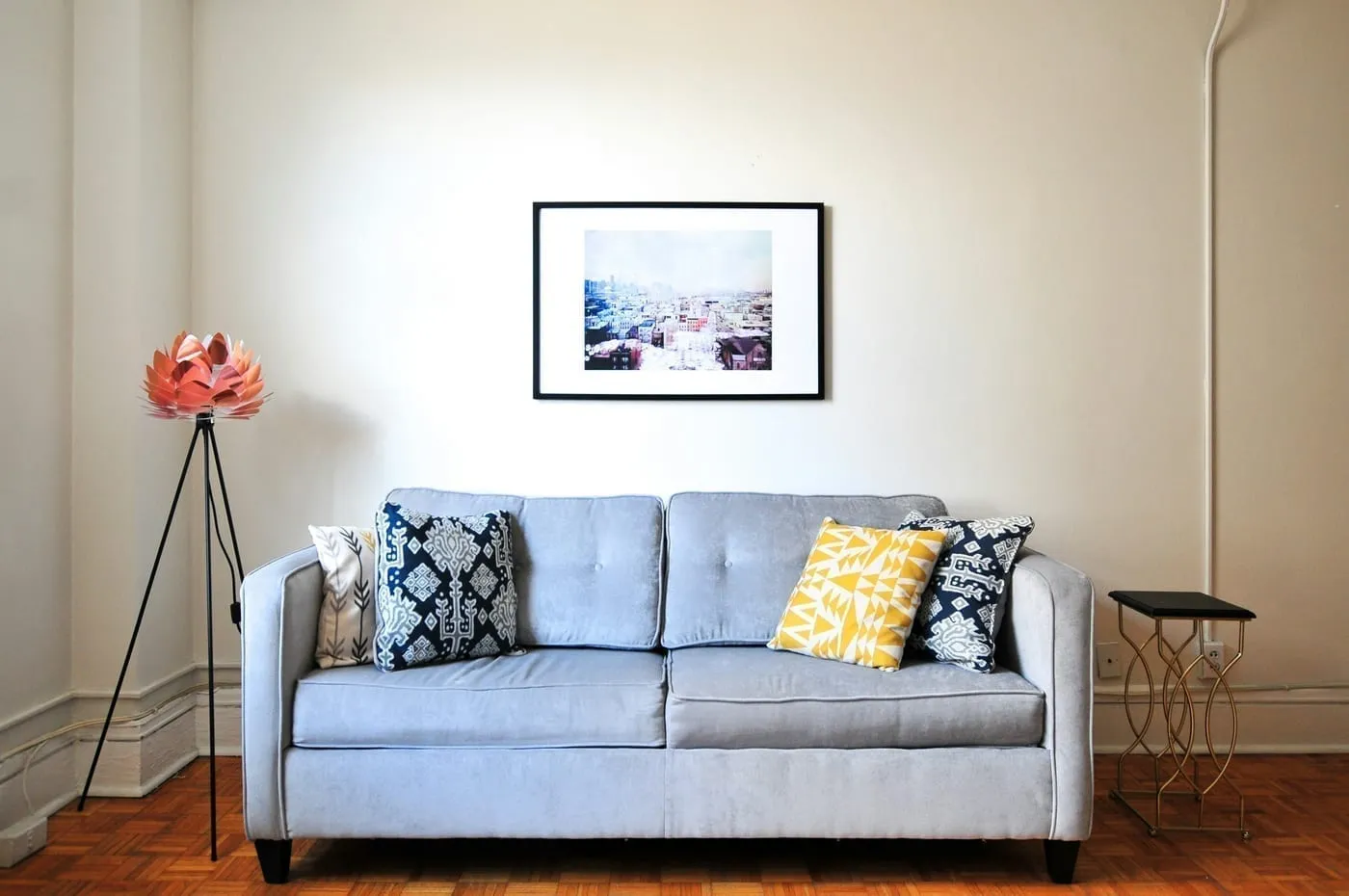
7. Why a Nesting Coffee Table Instead of a Fixed One?
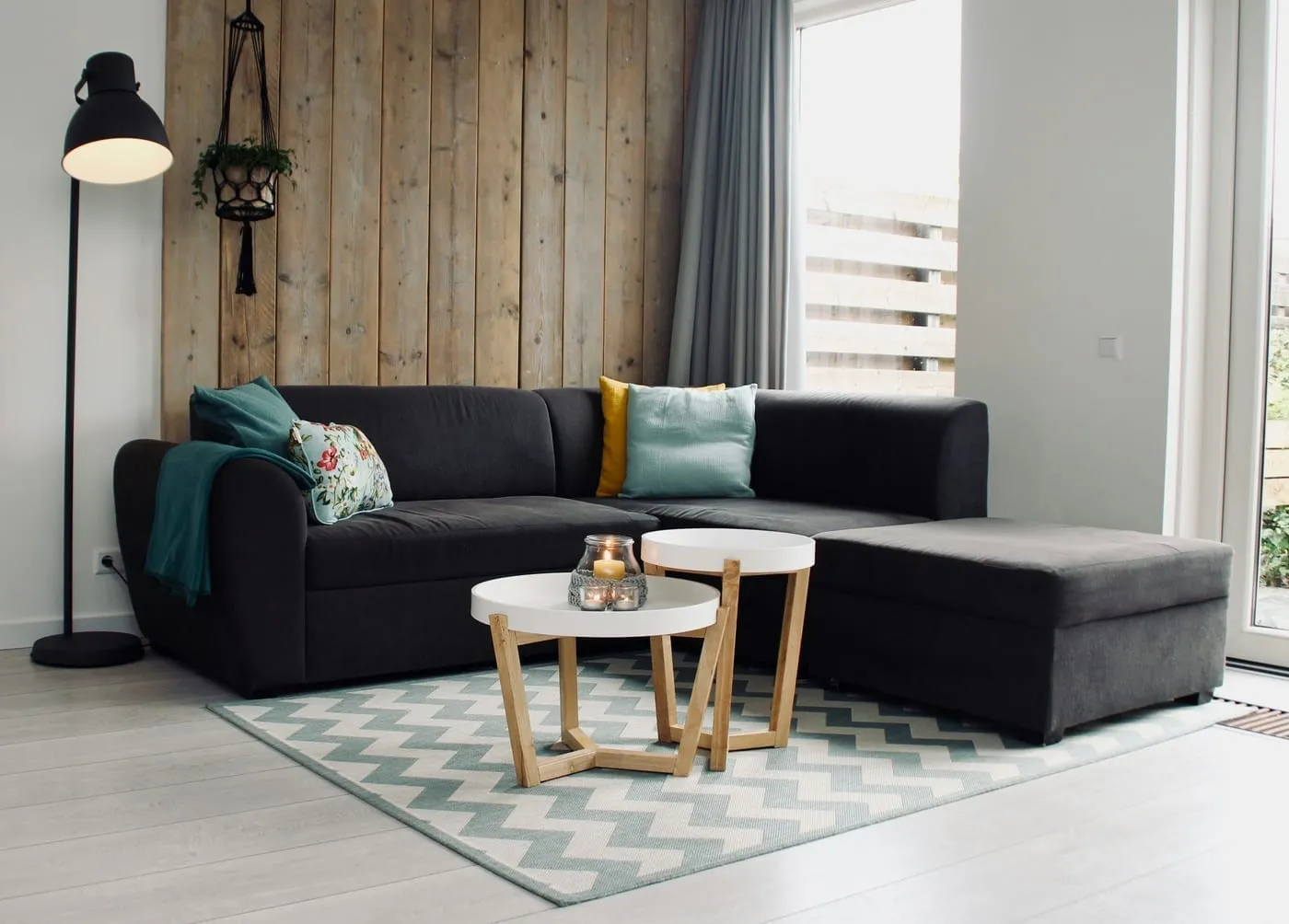
A standard coffee table takes up a permanent footprint in your floor plan. A set of IKEA SVALSTA nesting tables (~$79 CAD) can be pushed together when you need a surface and separated or tucked away when you don’t. A round coffee table (55–65 cm diameter) works too — it avoids sharp corners and leaves more walkable space than a rectangular table of the same surface area.
Cost: IKEA SVALSTA nesting tables, ~$79 CAD.
8. Why Multi-Function Every Piece?
In a small living room, every piece of furniture should do at least two things — a storage ottoman replacing both a coffee table and a linen closet in one purchase is the kind of two-for-one that defines every recommendation on this list. The fewer single-purpose pieces you own, the more space you have.
For specific multi-function furniture picks and prices, see the small space furniture guide.
9. Is Removable Wallpaper Worth It for One Accent Wall?
A single accent wall transforms a plain white box into a room with personality. For renters, removable peel-and-stick wallpaper is now good enough that most people can’t tell the difference from painted walls.
Apply it to the wall behind your sofa. Keep the other three walls neutral. One statement wall is enough — two is too much in a small space.
Cost: Removable wallpaper from Amazon.ca or Wayfair Canada, ~$30–$60 CAD per roll. A 180 sq ft living room accent wall needs roughly 2–3 rolls (under $180 CAD total).
→ See our full breakdown of renter-friendly apartment decor ideas for more no-damage options that actually look good.
10. Curtains Floor to Ceiling, Wall to Wall
Hanging curtains from ceiling height (not just above the window frame) makes the window look taller and the ceiling look higher. Extending the curtain rod past the window frame on both sides makes the window look wider.
For a small living room, use light, sheer curtains rather than heavy blackouts — you want every bit of natural light you can get.
Cost: IKEA HANNALILL sheers (~$29 CAD) with a ceiling-mounted KVARTAL track system.
11. Why Is Editing Ruthlessly the Hardest Small-Space Idea?
The hardest small space living room idea: own less stuff. Every decorative item on every surface takes up visual space — a room styled with three carefully chosen objects reads as calm and intentional, while the same room with twelve looks cluttered even if it’s technically tidy. The number of things on a surface matters more than how neatly they’re arranged.
Do a surface edit: remove everything from every shelf and surface, then put back only the items you genuinely love. Donate or box the rest. Most people discover they had three times more stuff than the room needed.
12. Define Zones with Furniture Placement
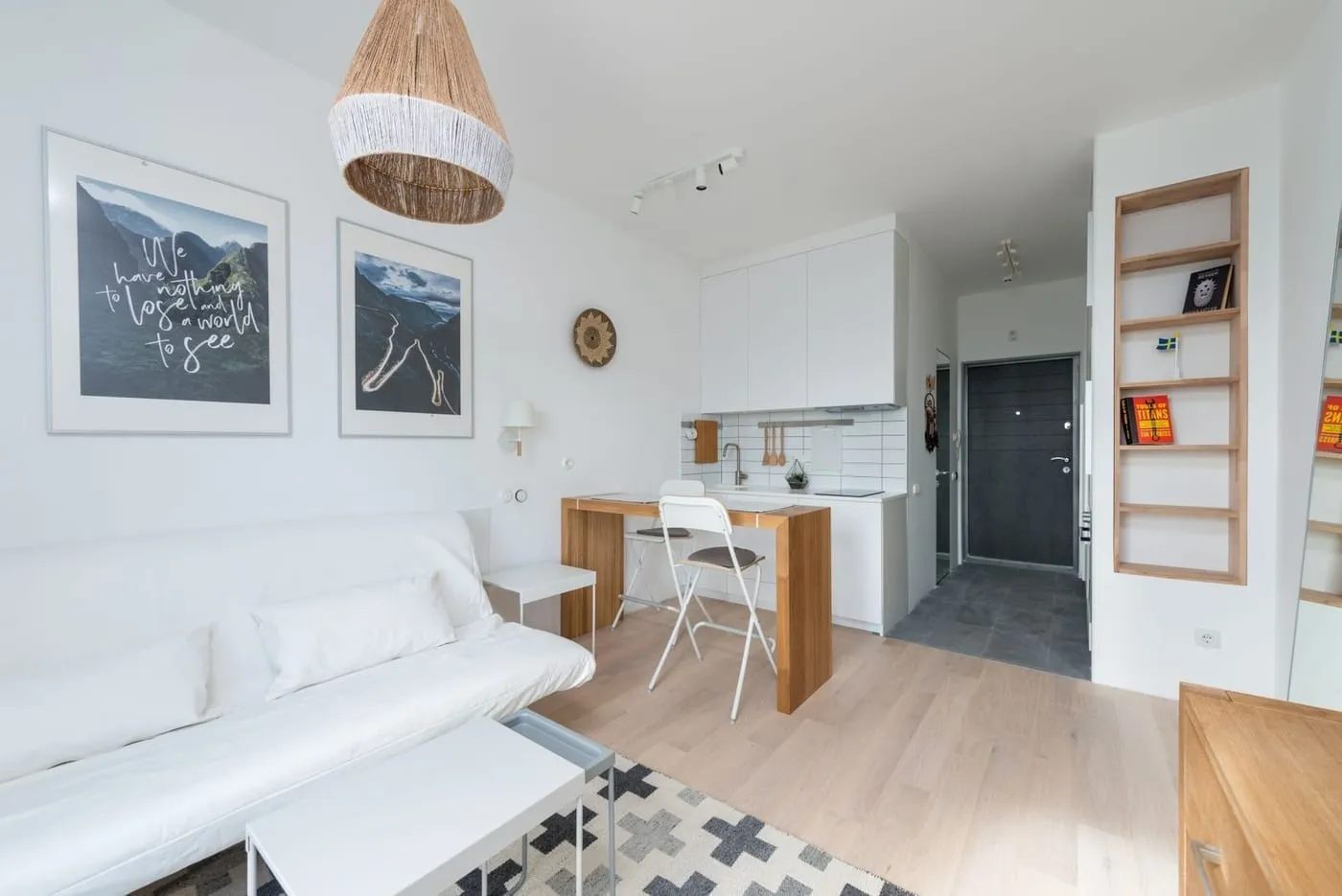
If your living room also contains a dining area or a desk, use furniture placement (not walls) to define the zones. The rug defines the seating zone. A narrow console table behind the sofa creates a visual boundary. A small pendant light over the dining table anchors that zone.
This makes a multi-function room feel organized rather than chaotic.
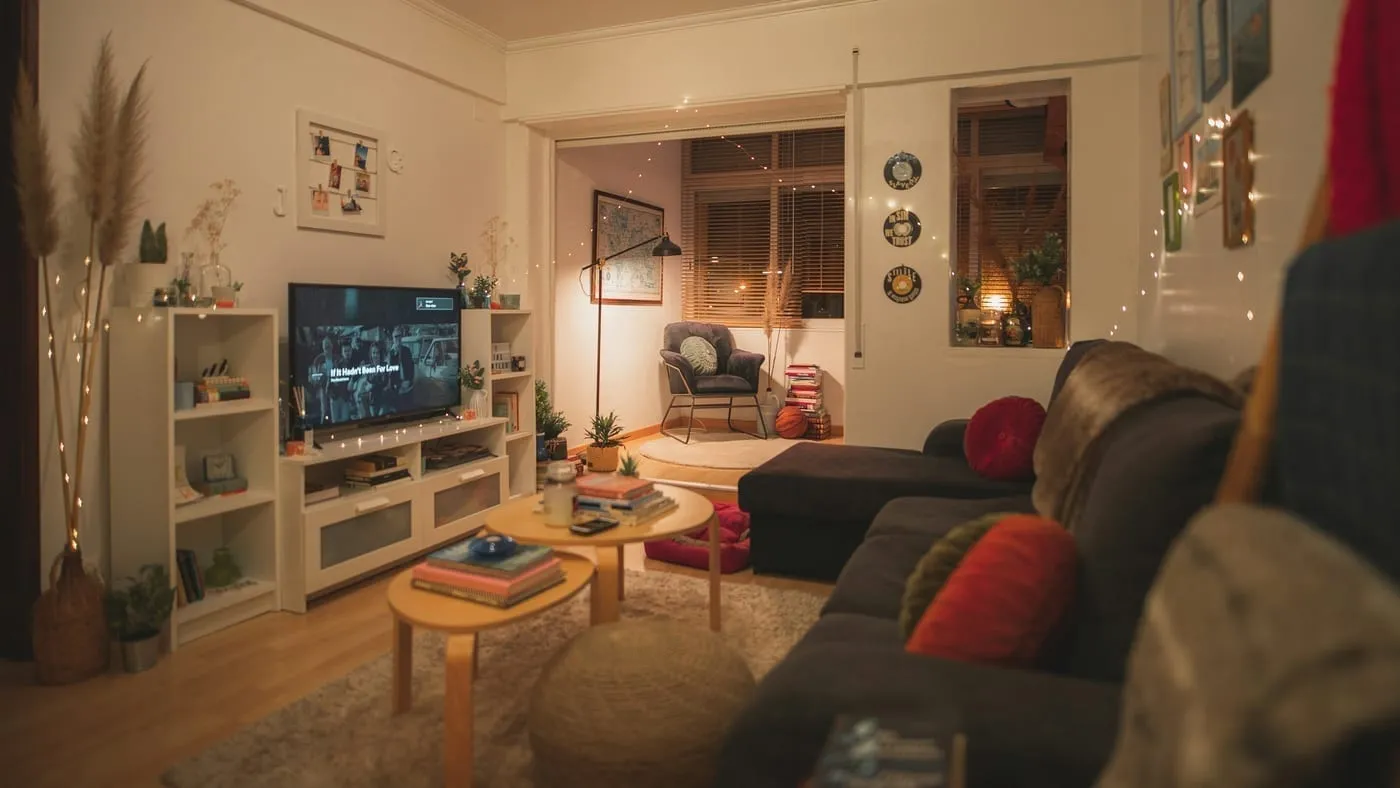
13. How Do You Layer Warm Lighting at Multiple Heights?
Overhead lighting only makes a small room feel flat and institutional. Add at least two additional light sources at different heights: a floor lamp in a corner, a table lamp on a sideboard, LED strip lighting behind the TV.
Warm bulbs (2700K–3000K) make the space feel cozy. Cool bulbs (4000K+) make it read like an office.
Cost: IKEA HEKTOGRAM floor lamp, ~$49 CAD. Smart bulbs from Amazon.ca, ~$12–$18 CAD each.
14. Paint or Contact Paper the Walls a Light, Warm Tone
White walls reflect light and feel spacious — but they can also feel cold and sterile. A warm off-white or greige (grey-beige) tone like Benjamin Moore White Dove or Sherwin-Williams Accessible Beige adds warmth without darkening the room.
For renters who can’t paint: large-format removable wallpaper panels in a neutral tone achieve the same effect.
15. How Do You Keep the Floor as Clear as Possible?
Floor clutter is the fastest way to make a small room feel smaller. Every item on the floor — shoes, bags, laundry, stacked boxes — visually reduces the square footage of the room.
The goal: only the sofa legs, coffee table legs, and rug should touch the floor. Everything else goes in cabinets, on shelves, or in a closet.
The $300 CAD Small Living Room Starter Kit
If you’re starting from nothing or doing a reset: this $303 CAD combination of a large rug, a mirror, removable wallpaper, and hanging strips covers the four changes proven to do more for a small living room than any single furniture purchase.
| Item | Cost (CAD) |
|---|---|
| IKEA STOENSE area rug (200×300 cm) | ~$129 |
| IKEA NISSEDAL mirror | ~$99 |
| Removable wallpaper (2 rolls) | ~$60 |
| Command Picture Hanging Strips (for mirror) | ~$15 |
| Total | ~$303 CAD |
These four changes — rug, mirror, accent wall, and cleared floors — will do more for a small living room than any furniture purchase.
16. Stick to One Cohesive Colour Palette
A living room that shares its palette with the rest of the apartment reads as one unified space instead of a disconnected room — which makes the whole home feel bigger. Pick three colours and carry them through: a neutral base (walls, larger furniture), a main colour (textiles, cushions, decor), and a single accent colour for one or two objects. Resist adding a fourth.
17. Fewer, Better Pieces Beat More Mediocre Ones
A living room furnished with around 8 carefully chosen pieces reads as more spacious than one filled with 20 mediocre ones — every additional item adds visual weight regardless of quality. When in doubt, leave the space empty rather than fill it. Empty space is part of the design, not a gap to fix.
18. Try Glass or Lucite for One Piece
Glass and clear acrylic (Lucite) furniture is visually transparent — the eye reads through it rather than stopping at it, so it takes up physical floor space without registering as visual clutter. A glass or acrylic side table is the easiest place to try this: it holds a lamp or a coffee cup exactly like a solid table, but doesn’t add to the room’s visual weight the way a matching solid-wood table would.
What to Do Next
Once your living room layout is working, the bedroom is usually the next pain point. Storage under the bed, slim wardrobes, and floating nightstands solve most small bedroom problems without touching a wall.
Read our guide on small bedroom storage ideas for Canadian apartment renters — 14 practical solutions that work in rooms as small as 90 sq ft.
→ Need the seating itself to double as storage in this exact layout? Small living room storage ideas covers ottomans, coffee tables with shelves, and TV consoles built to hide the clutter.
→ Small apartment bathroom storage ideas covers the room this guide doesn’t touch, with the same renter-friendly approach.
→ For the mood and lighting side of this same room, see vibey apartment living room ideas.